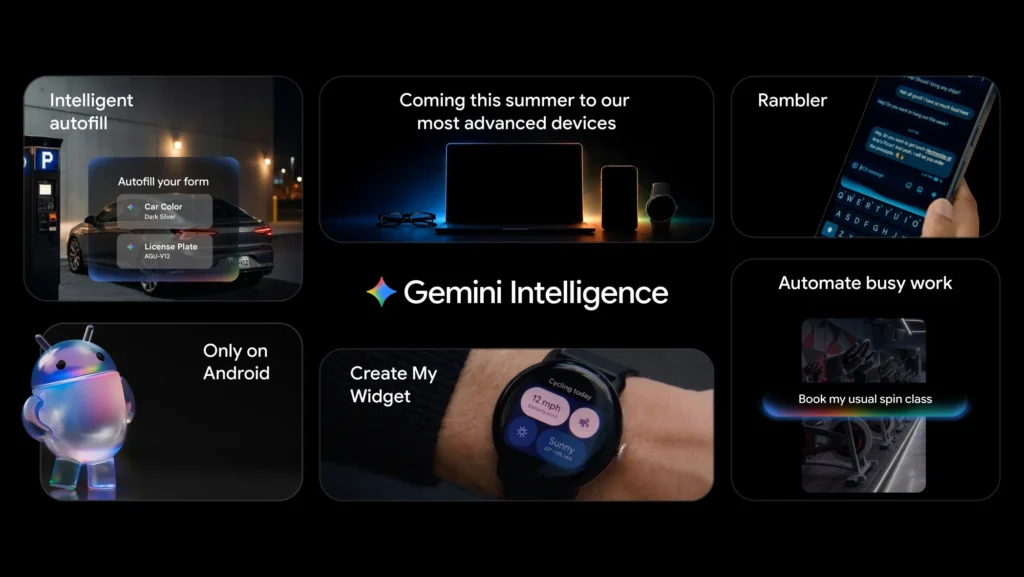
On May 12, Google unveiled Gemini Intelligence, a new bundle of Android AI features. The core idea is to expand Android from a simple operating system into an intelligent system that understands user context and handles tasks on their behalf. The features will be rolled out sequentially starting this summer with the latest Samsung Galaxy and Google Pixel smartphones, and are subsequently scheduled to expand to Android devices such as watches, cars, glasses, and laptops.
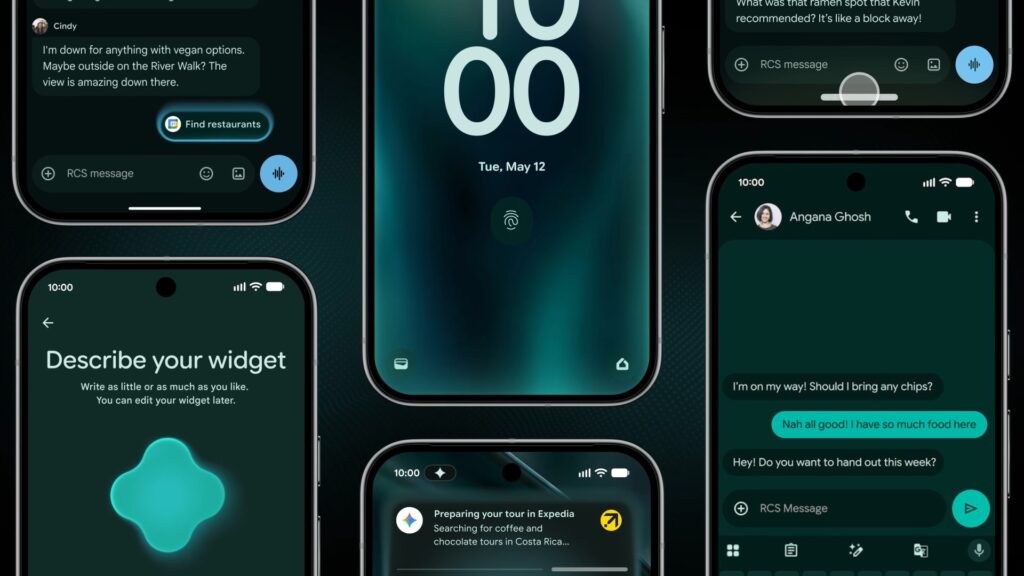
Gemini Intelligence automates the various steps that previously required switching between apps. For example, you can find a syllabus in Gmail and add necessary books to your cart, or transfer a shopping list from a notes app to a delivery app cart. If you take a photo of a travel guide and request, “Find me a tour like this for six people,” Gemini searches for relevant services and displays progress updates via notifications. It is designed to operate only when a user issues a command and requires a confirmation step before final execution.
The browsing experience is also changing. Chrome for Android now includes Gemini, which can summarize web pages, compare various content, and handle repetitive tasks like scheduling. Google Autocomplete is also connected to Gemini. If the user allows it, it fills out complex mobile forms in one go based on information from connected apps. Google explained that this connection is optional and can be turned on or off in the settings.
The input method is also changing. Instead of simply transcribing what the user says verbatim, the new feature Rambler cleans up repetitive phrases and redundancy to create more concise sentences. It understands the context even when multiple languages are mixed and organizes them into a single message. Google stated that voice is used only for real-time transcription and is not stored.
Widgets, a signature feature of Android, are also being expanded into a generative UI. Create My WidgetIt creates customized widgets based on natural language descriptions of the information the user wants. For example, if you say “Recommend three high-protein meals every week,” it creates a meal widget that can be added to the home screen, and it can also create widgets containing only specific information, such as a “weather widget showing only rain and wind speed.”.
This announcement demonstrates that the standards for how smartphones are used are changing. Until now, mobile operating systems have been structured around launching apps, searching for information, and user input. Gemini Intelligence moves in the direction of reducing task steps by connecting the user's screen, images, app data, voice, and web context. To achieve this, Google is also applying a new design language based on Material 3 Expressive to make the moments when AI intervenes appear more visually natural.