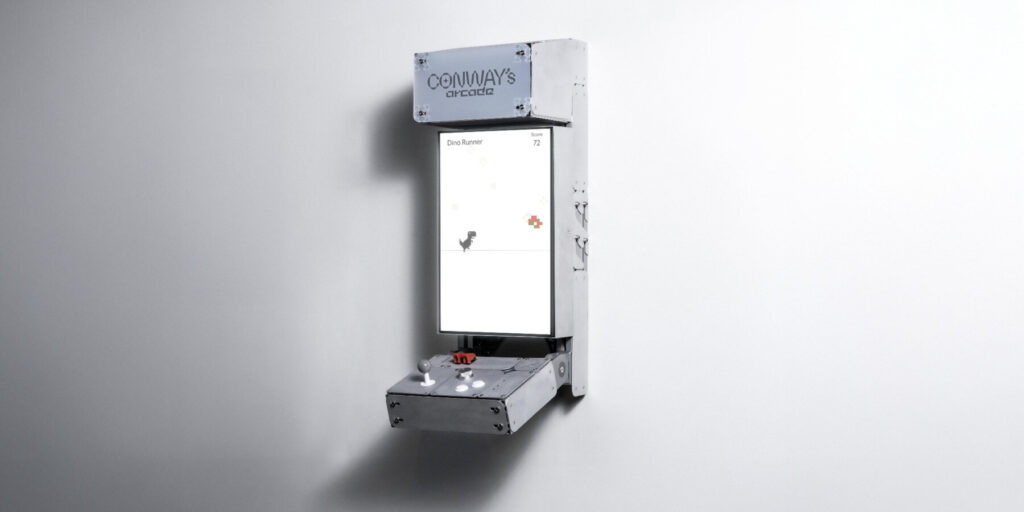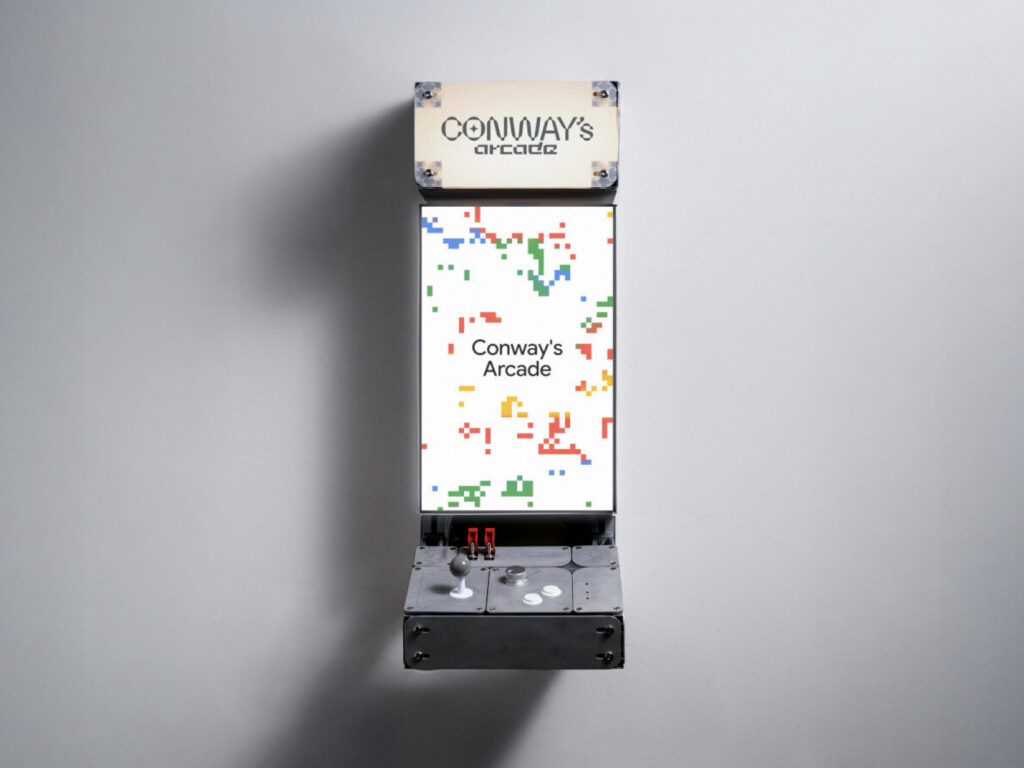
To broaden its reach with the AI research community, Google has unveiled an installation that reimagines arcade games. The project is called Conway's Arcade. Unveiled at the New Lips 2025 event, the installation doesn't simply replicate classic games; it transforms the computational rules themselves into play, allowing visitors to interact with the game, inputting information, and observing the reactions.
Conway's Arcade translates John Conway's concept of cellular automata, known as the Game of Life, into a hardware experience. It uses the structure of simple rules repeating to create complex patterns as the backbone of the game system, expanding upon it to allow for the generation of infinitely different rules and maps on a single device. While referencing familiar formats like Space Invaders, Breakout, Flappy Bird, and Chrome Dino, the key is that rather than retreading the same games, it reassembles them into a generative structure where the rules change based on input. 
The hardware is constructed using a modular aluminum structure. During the manufacturing process, material selection and tolerance assembly logic were considered essential for usability, with mobility and on-site installation efficiency being key objectives. Manufactured in Barcelona, the goal was a lightweight structure that could be assembled by one person in less than an hour.
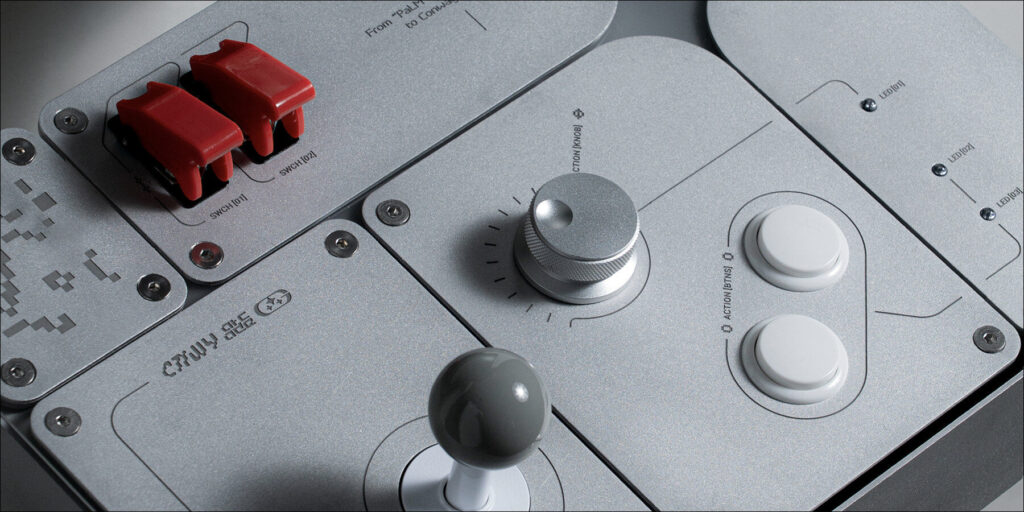
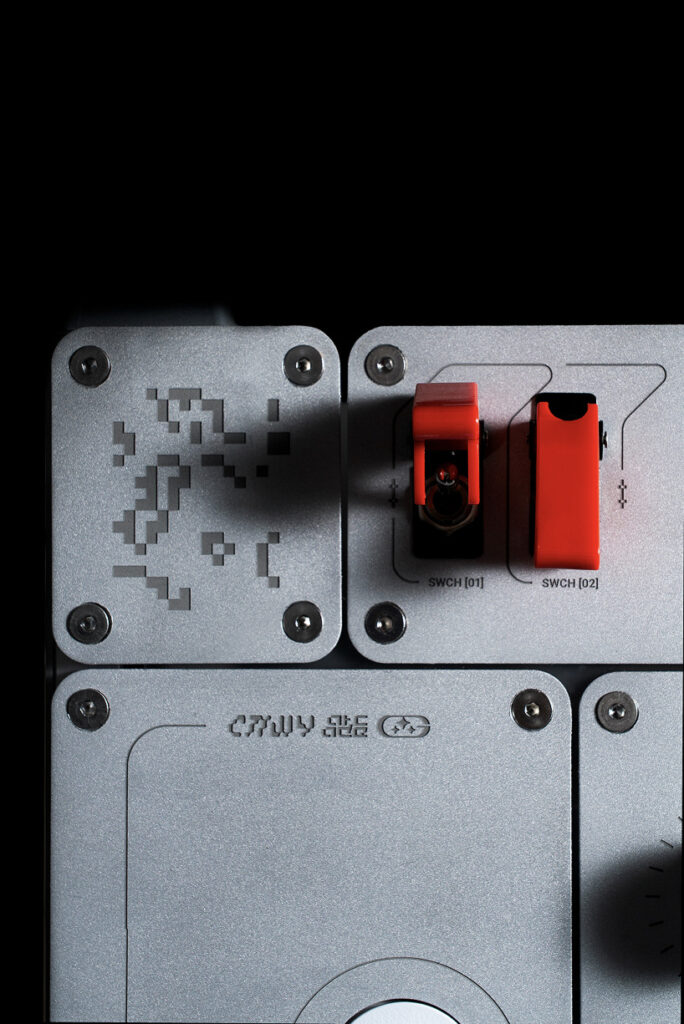
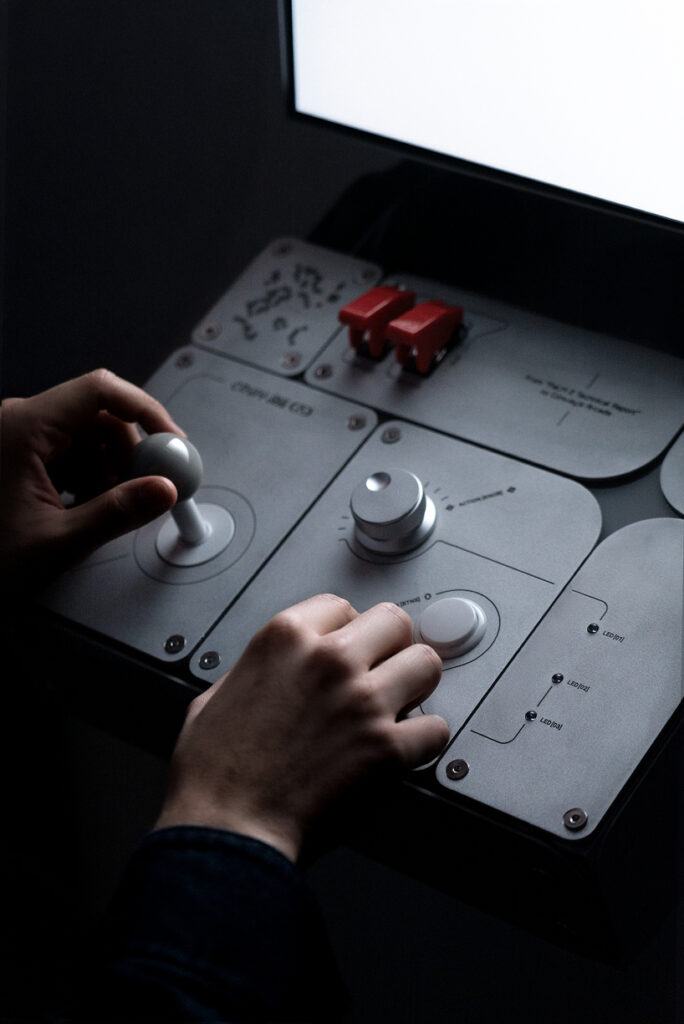
The interface also directly taps into a retro sensibility. It draws on the language of traditional arcades, such as custom typefaces, mechanical joysticks, physical buttons, and red latch switches, while combining it with a modern frame, UX, UI, and visual identity system. The on-screen graphics are composed in an 8-bit style, visualizing the logic of cellular automata, with each cell actively interacting within a single session. 
Gemini 3.0 was used to generate game rules. The system generates new rule sets in real time, inducing different developments in each session. This demonstrates that Conway's Arcade is not an emulator, but rather a structure where rules become content, aiming for an experience where mathematics, design, and interaction are seamlessly connected. Some have even praised the booth's communication strategy, shifting from explaining technology to stimulating the desire to play.
Newlips is known as a venue for researchers and companies worldwide to share cutting-edge research and technological trends. Within this context, Conway's Arcade is seen as an example of translating artificial intelligence from academic papers into a pop culture interface. By transforming the abstract concept of a rule-based system into a manipulable object and making the results immediately apparent through visitor input, it demonstrates how exhibitions can expand beyond technology demonstrations into the realm of experience design.