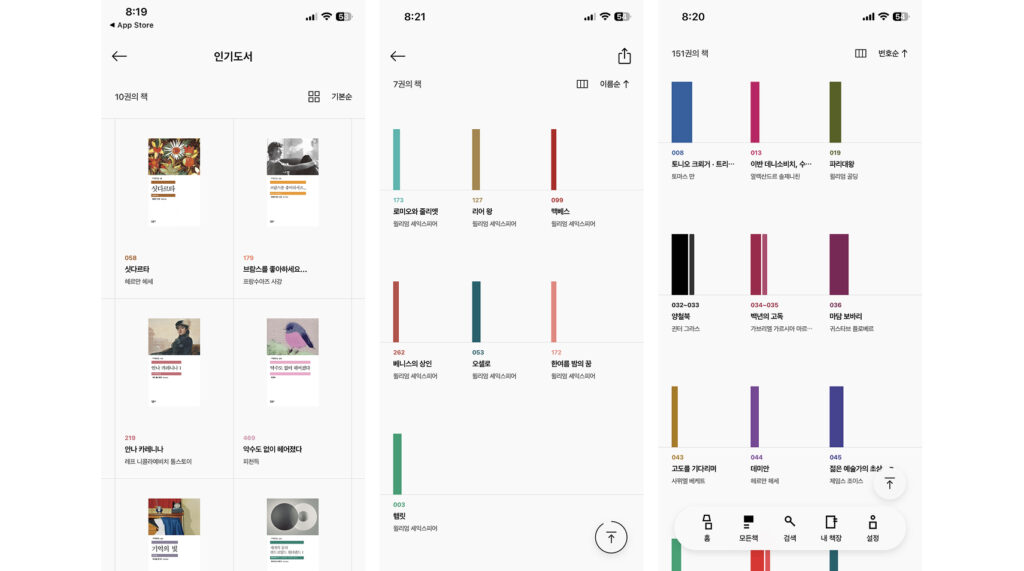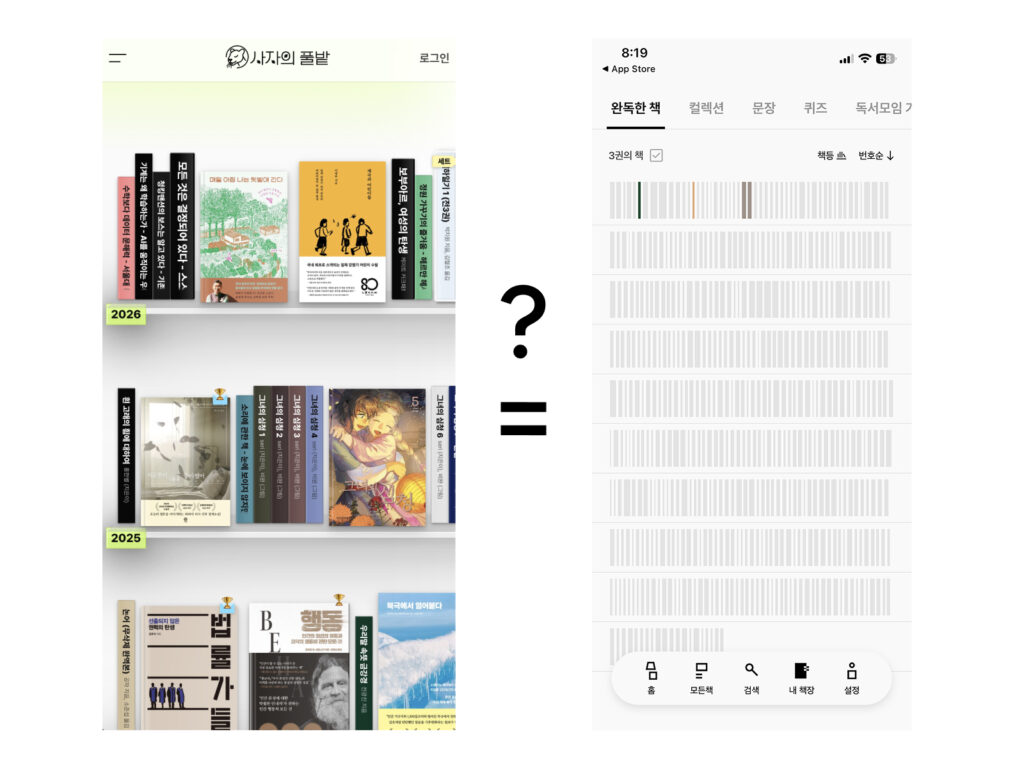
A controversy regarding UI similarity has arisen concerning the 'World Literature Collection' app released by Minumsa. Minumsa recently unveiled a catalog app compiling information on 500 volumes of the World Literature Collection. The app provides features such as work introductions, author and translator information, genre and award history, keyword search, a personal bookshelf, a record of completed books, and a sentence recording function. In the app's introduction, Minumsa explained, "You can collect books you want to read, record sentences that resonated with you, and look back on your own reading journey at a glance through the works you have finished.".
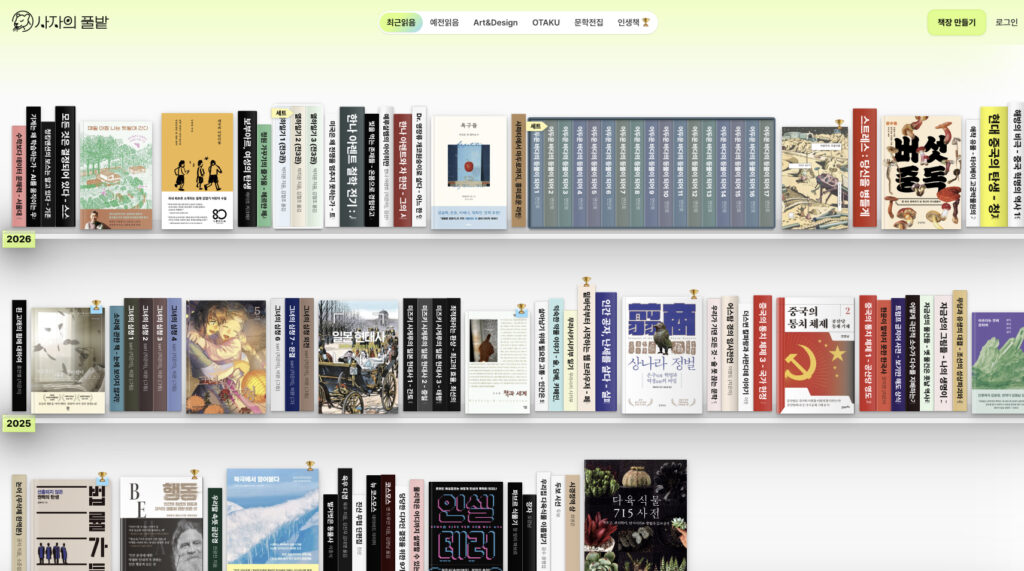
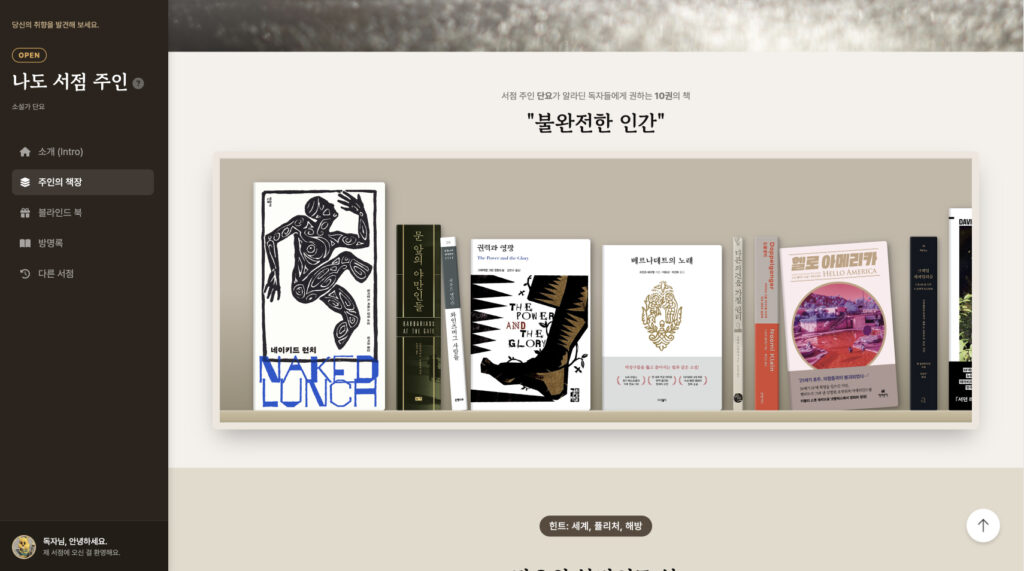
This sparked controversy when a developer claimed similarities between their app, the Minumsa app, and Aladdin's "I'm a Bookstore Owner" screen. The developer argued that their ideas were copied, citing examples such as the way books are displayed on a bookshelf, the representation of book thickness, and the "finished reading" button.
While some sympathized with the individual developer's concerns, others viewed the expression as difficult to consider a unique invention of a specific individual. The method of displaying books by placing them on a bookshelf is a form of skeuomorphism that has long been used in digital reading services. Skeuomorphism is a design approach that transfers the forms and textures of real-world objects onto digital interfaces to help users intuitively understand functions. The wooden bookshelf-style UI of Apple's iBooks from around 2010 is also frequently cited as a representative example.
Furthermore, the bookshelf representation in the Minumsa app goes beyond the simple function of collecting books to visualize the experience of filling the complete set piece by piece. It utilizes the color identity symbolizing the Minumsa World Literature Collection to create a contrast between empty and filled areas. Additionally, completed books are marked with color, allowing users to feel the "sense of conquering the World Literature Collection." From a UX perspective, this is akin to a design that combines the desire to record reading with the desire to collect.
It is highly likely that this controversy will end as a mere happening. However, the question remains: where does UI plagiarism begin? If similarities at the level of placing books on a bookshelf, displaying spines, or marking read books are considered plagiarism, the range of expressions available to digital products narrows significantly. This could restrict everything from a book app using a bookshelf metaphor, a music app displaying album covers, to a calendar app borrowing a calendar format.
UI is created by the overlapping of functions, conventions, and metaphors. In particular, interfaces derived from the real world, such as bookshelves, maps, cards, and folders, are close to expressions already shared across the industry. Strongly protecting these expressions themselves as rights can actually be disadvantageous to individual developers. This is because if big tech companies like Apple and Google widely monopolize the interface syntax they established first, the options available to small teams or individual developers will be further reduced.