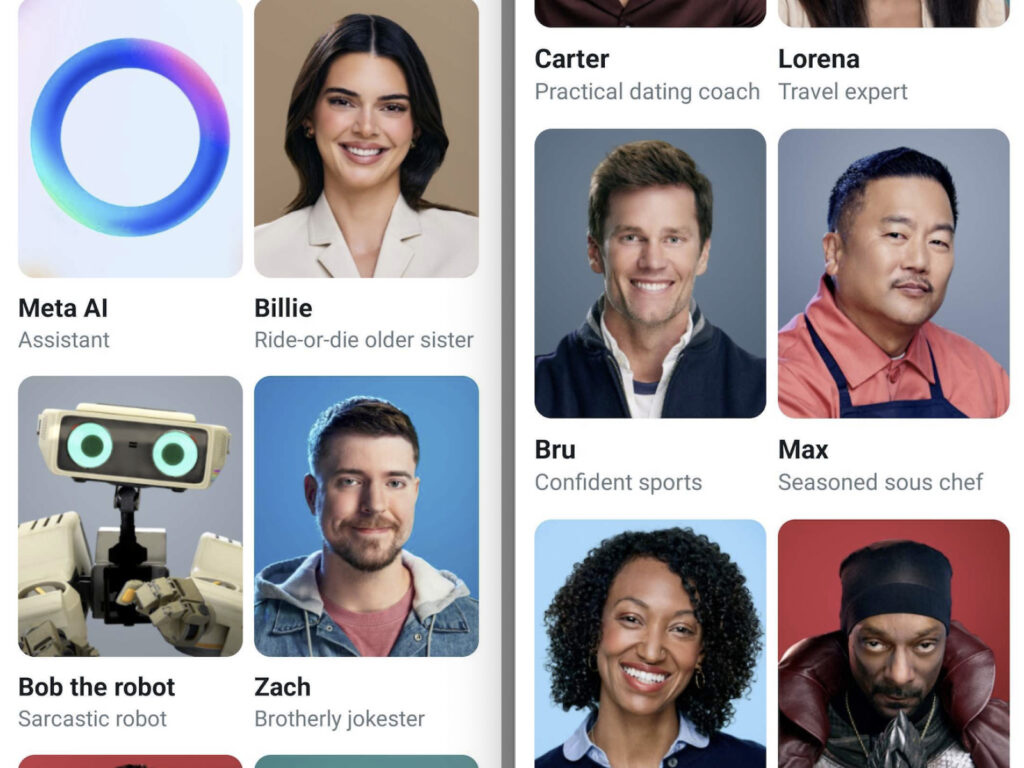
Meta, a leading American tech company, is once again facing fierce criticism. The revelation that AI chatbots created without the consent of global celebrities, including Taylor Swift, Scarlett Johansson, Anne Hathaway, and Selena Gomez, were active on Meta's platform has sparked ethical and legal questions.
According to Reuters, some of the chatbots were created by regular users, but at least three were developed by Meta employees. Two of them were based on Taylor Swift, and these chatbots engaged in inappropriate behavior with users on Meta-operated platforms like Facebook, Instagram, and WhatsApp, including engaging in sexually suggestive conversations and suggesting real-life encounters.
Even more shocking is the fact that some chatbots have even generated photorealistic images of celebrities, including those in their underwear or sitting in bathtubs. Concerns about child protection are growing, especially after it was revealed that a chatbot modeled after 16-year-old actor Walker Scovel generated a topless image.
When this news became known, Meta's stock price plummeted by more than $121,000 in after-hours trading, wiping out approximately $10 billion in market capitalization. This is a sign of a sharp shakeup in the confidence of both investors and users.
Meta announced that it had removed some of the problematic chatbots before the controversy spread and would restrict teenage users from discussing sensitive topics like romance, self-harm, and suicide with AI characters in the future. They also explained that they were strengthening their internal guidelines. However, Meta spokesperson Andy Stone acknowledged, "While we allow the creation of images of public figures, nude or sexually suggestive images are prohibited, and this case represents a failure to enforce our policy."
Experts have pointed out that this incident could constitute a violation of the right of publicity, or commercial rights such as one's portrait and name, recognized in some U.S. states. In particular, Stanford University law professor Mark Lemley assessed that the chatbots' degree of modification was insufficient to warrant legal protection as a "parody."
In this regard, U.S. Senator Josh Hawley launched an official investigation, demanding Meta's AI policy and internal risk assessment report. The Screen Actors Guild (SAG-AFTRA) also issued a statement, urging strong federal legal action, citing the potential for AI chatbots to lead to real-world crimes.
Meanwhile, the social tragedy caused by the misuse of AI technology is once again highlighted as news reports show a 76-year-old man who believed and acted on a conversation with a meta chatbot and died in an accident while traveling to New York to meet an AI character.
This incident vividly illustrates the impact of generative AI technology on society and the ethical responsibilities it poses, and is expected to serve as a significant benchmark for future AI policy development by tech companies.