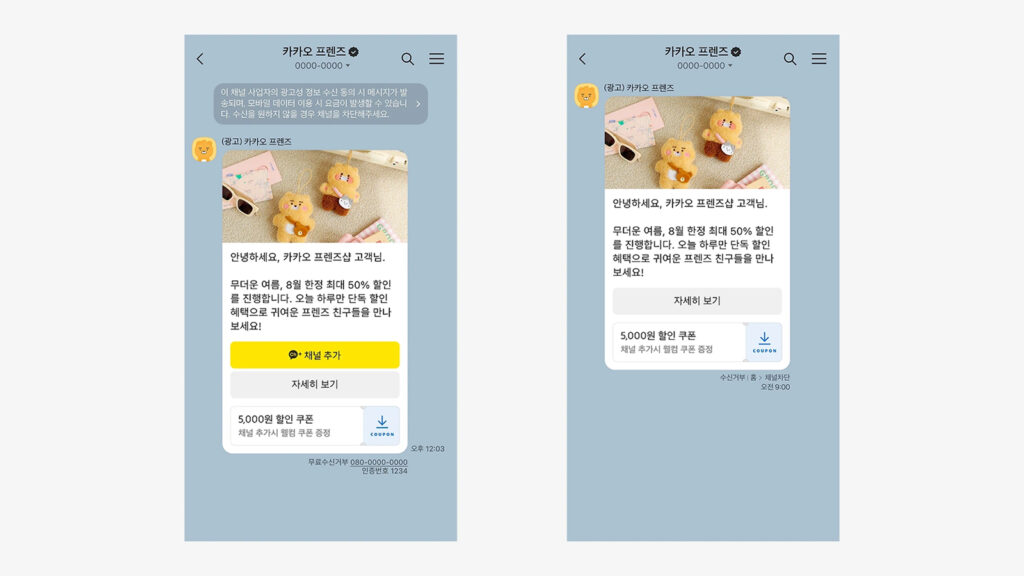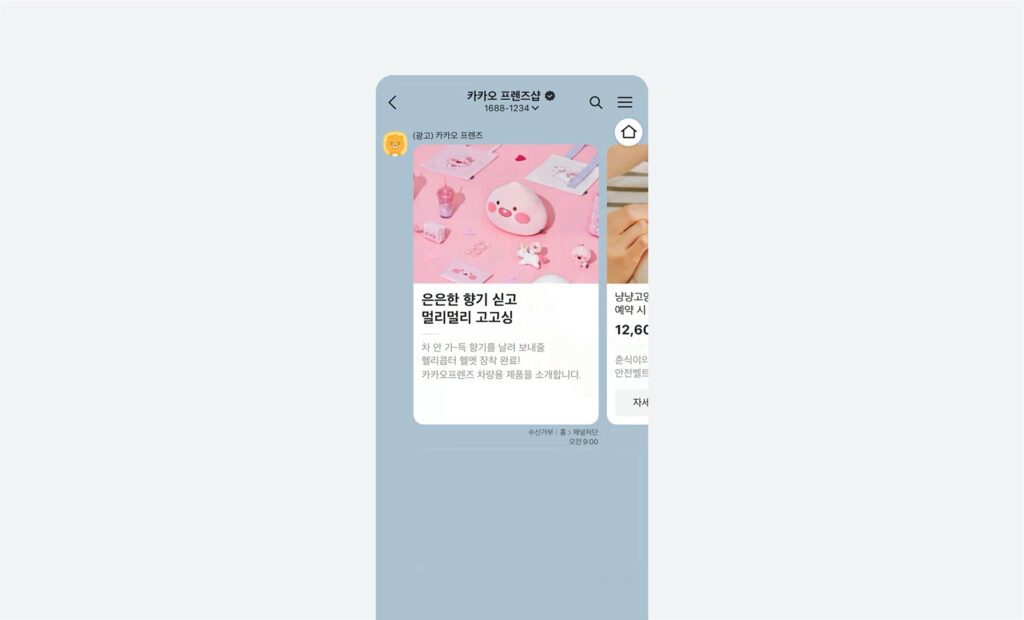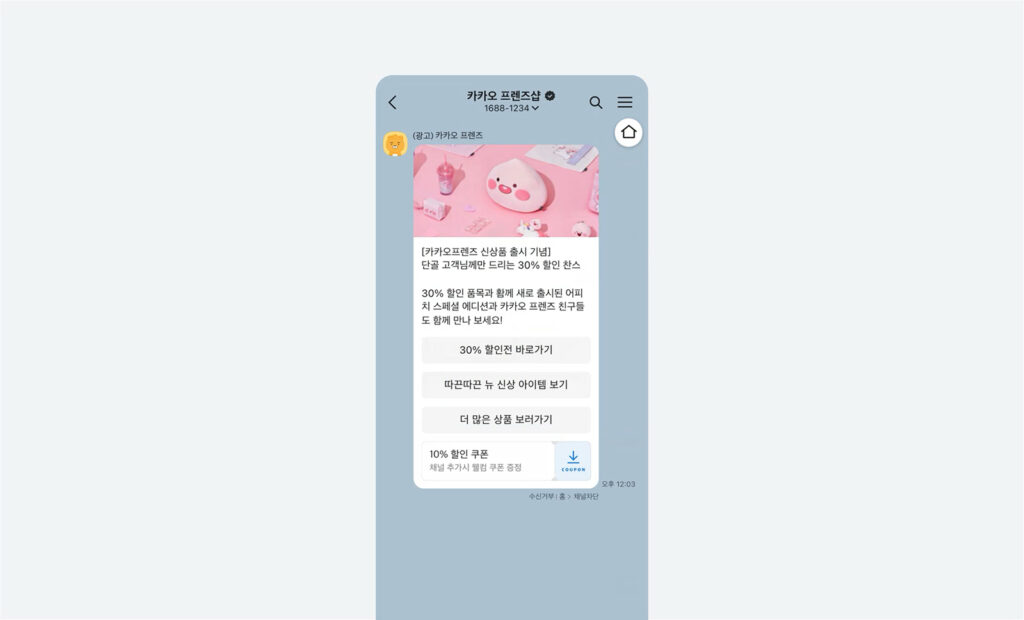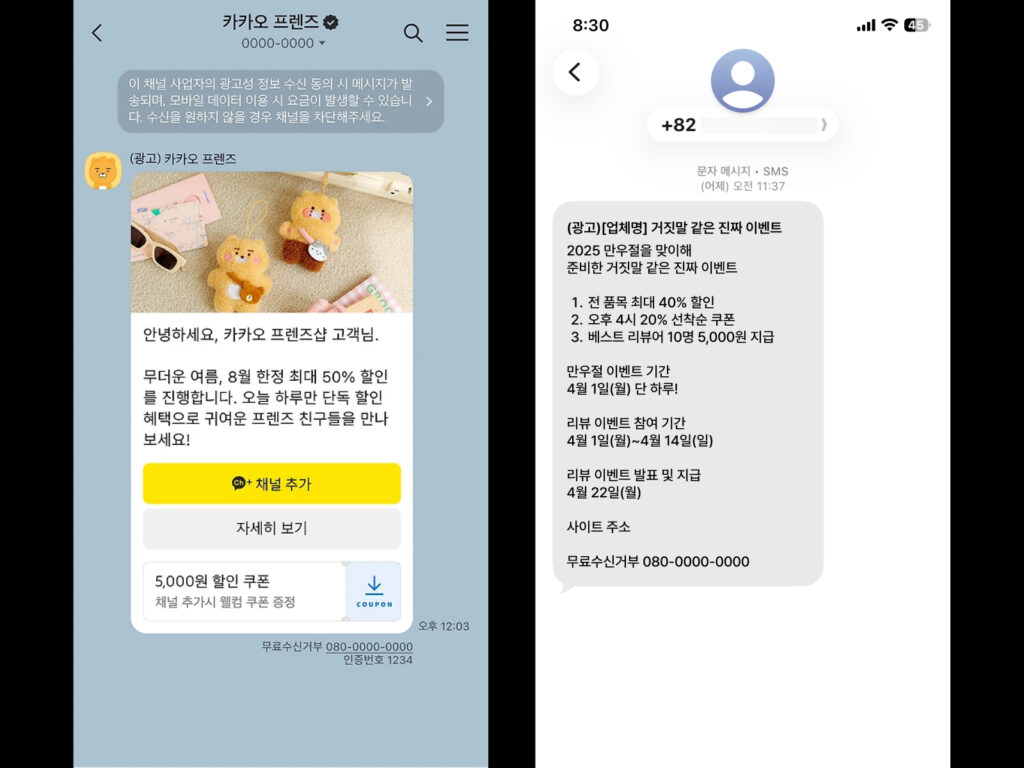
The conflict between Kakao and the text messaging industry is intensifying over its KakaoTalk branded messaging service. According to industry sources on the 25th, the Special Type of Value-Added Messaging Operators Association (SOMA), which includes text messaging companies, reported Kakao to the Personal Information Protection Commission, alleging that the company has been using users' personal information without their consent. SOMA claimed that Kakao is sending advertisements without consent by matching phone numbers received from advertisers with KakaoTalk accounts, and also pointed out that data costs are passed on to consumers as a problem.
Kakao immediately responded with a rebuttal. Kakao emphasized that brand messages are a service sent with users' prior consent in accordance with the Information and Communications Network Act, and that the use of personal information falls within the scope of membership management purposes. Furthermore, they disclosed the results of a survey conducted by research teams at Hongik University and Ewha Womans University, stating that brand messages had a trustworthiness score of 4.46, higher than SMS (3.72). Kakao explained that brand messages are targeted at channel friends and users who have consented to receiving promotional information, and that personalized advertising is also possible.
The industry interprets this situation more as a power struggle over the restructuring of the text messaging market, which is worth 1.5 trillion won annually, than as a privacy issue. KakaoTalk, with 46.11 million monthly active users in Korea, has established itself as a de facto platform, and this influence has created a sense of crisis among existing text messaging service providers. Experts point out that while competition for market share is fundamental, it is also necessary to address privacy and consumer inconvenience issues.