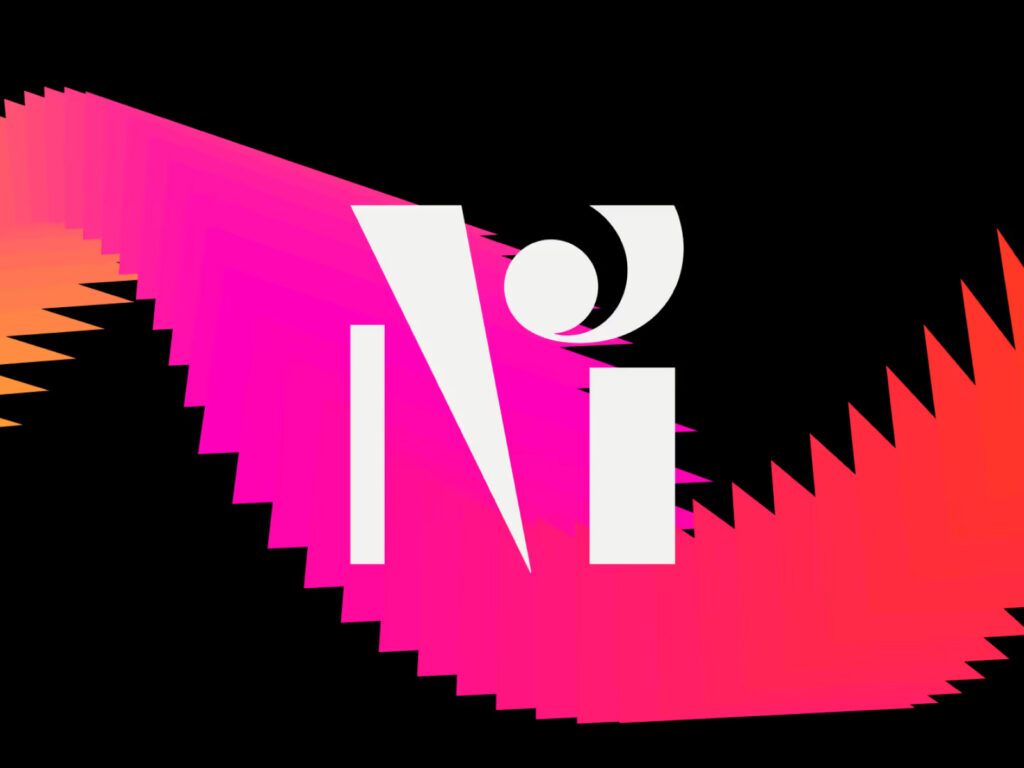
This brand design was a collaboration between Collins and Muse Group, a globally popular music software company. Despite Muse's robust portfolio of products, including Ultimate Guitar, MuseScore, Audacity, and MuseClass, the company lacked a visual and emotional connection between them. Collins, therefore, undertook the task of restructuring this disparate ecosystem into a single, emotionally integrated brand.
Collins wanted to position Muse not just as software, but as a partner in supporting creative fluency. The goal was to empower users to experience a natural flow of performance and creation.
To achieve this, Collins defined Muse's brand purpose as "inspiring artists and liberating their sounds." From a design perspective, he explored experimental scores, spectrograms, sound waves, and motion analysis techniques like Labanotation to visualize the physical and emotional essence of music. The result was a visual module that pulses and harmonizes like a musical note, which became the foundation for the brand's graphic language and motion system.
Based on this module, Collins developed a custom typeface, "Muse Display," which gives each product its own unique identity while maintaining a common "musical DNA." For example, "Sonata," a typeface for MuseScore, evokes the curves of musical notation, while "Shred," for Ultimate Guitar, captures the intensity of a guitar solo.
Instead of using conventional, genre-centric icons, Collins employed the universal language of sound vibration. This was an attempt to view music not as a genre but as a continuation of sensation, flow, and resonance. Russian Constructivist philosopher Kazimir Malevich's declaration that "emotion is more important than the environment" also directly influenced his design philosophy.