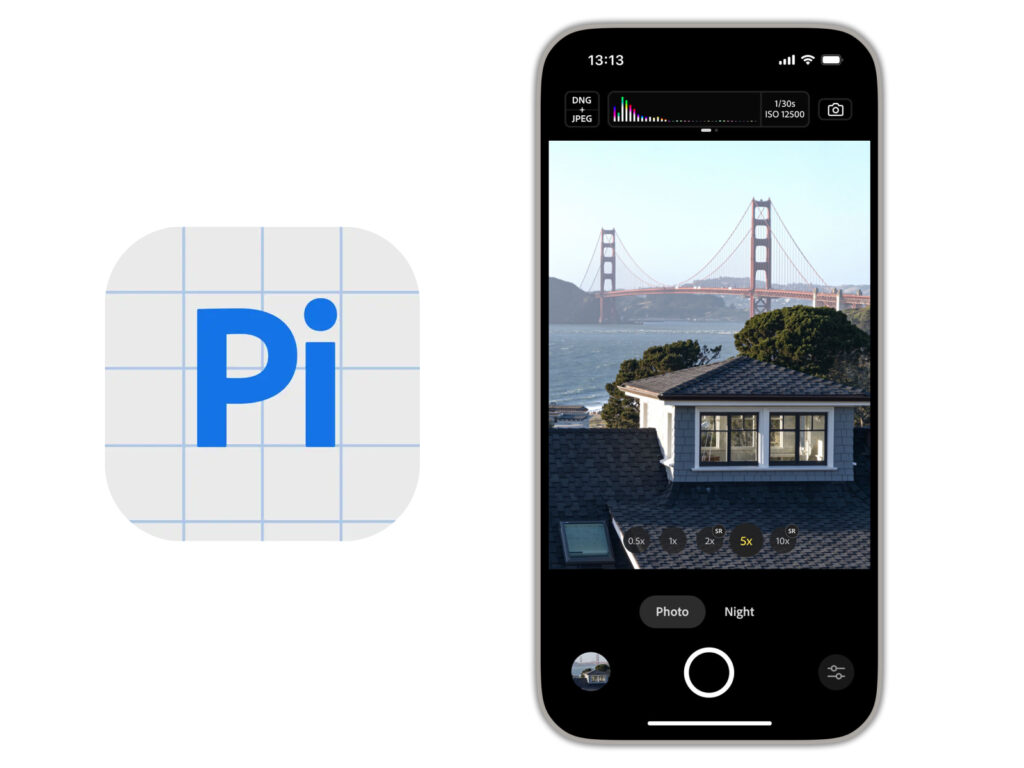
Adobe has officially released Project Indigo, the next-generation camera app for iPhone users. The app is designed to overcome the limitations of existing smartphone cameras that rely on excessive correction, and to take natural, high-quality photos like a DSLR. The app is currently available for free download on the Apple App Store, and can be used on iPhone 12 series and later Pro models and iPhone 14 and later general models. It is not yet available in Korea.
Project Indigo is an app developed by former Google researchers Marc Levoy and Florian Kainz, who developed the 'Pixel Camera', and it implements the essence of computational photography in a mobile environment. Its biggest feature is the technology that reduces noise and simultaneously preserves details in highlights and shadows by quickly shooting up to 32 low-exposure images for a single photo and then aligning and merging them. This allows users to take clear photos without a tripod even in dark environments.
Indigo moves away from the classic ‘smartphone-like’ image tone, and delivers more natural and realistic results through soft colors, restrained sharpening, and understated tone mapping. In particular, it applies computational photography technology equally to both JPEG and RAW (DNG) formats, and supports a hybrid JPEG format that includes both SDR and HDR, designed to allow vivid images to be viewed even on high-resolution displays.
You can finely adjust ISO, shutter speed, white balance, focus, and frame rate, and the 'Long Exposure' function allows for creative work utilizing long exposure photos or light trails. In addition, AI-based reflection removal function and multi-frame super resolution technology allow you to obtain results without image quality degradation even when zooming.
Indigo is also closely integrated with Adobe's photo editing app, Lightroom. You can edit your photos right after shooting in Lightroom, and you can freely adjust not only JPEGs but also DNG files with computed photos applied in Lightroom. In the future, you will also be able to set Indigo as the default shooting app instead of Lightroom Camera.
Adobe sees Indigo as more than just a camera app, it’s a platform for experimenting with future photography technologies. With the upcoming Android release, it will feature AI-based focus and exposure bracketing, advanced video recording capabilities, and customizable image profiles.