OpenAI has unveiled two new features to prevent overuse and misuse of ChatGPT. These changes are focused on supporting users' emotional safety and critical thinking.
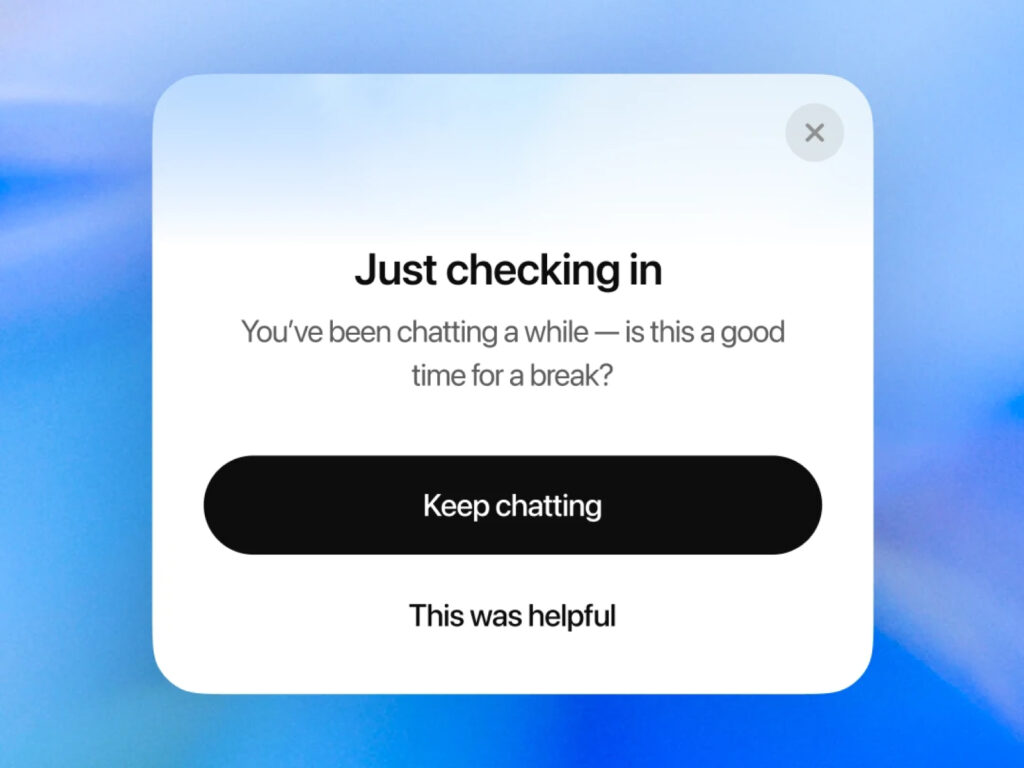
The first is the "Break Reminder" feature. If a user engages in a prolonged conversation with ChatGPT, a gentle message like "How about taking a break?" appears at the top of the screen, naturally suggesting a break without interrupting the conversation flow. OpenAI emphasized that "ChatGPT is not designed to keep users busy for long periods of time," but rather "to help them achieve their goals and get back to their lives."
The second is the introduction of "action-driven advice." When a user asks a crucial question like, "Should I break up with my partner?", ChatGPT responds in a way that encourages independent thinking, rather than simply giving a "yes" or "no" answer. The structure shifts to asking questions and guiding decision-making, allowing the user to weigh the pros and cons and organize their thoughts. This feature aims to reduce over-reliance on sensitive decisions.
OpenAI stated that these improvements were based on collaboration with experts. They developed criteria for evaluating complex, multi-session conversations with 90 physicians (including psychiatrists, pediatricians, and general practitioners) from 30 countries around the world, and also formed an advisory group in the fields of mental health, youth development, and human-computer interaction (HCI).
Meanwhile, OpenAI previously rolled back an update in April that produced overly "good" answers. The update prioritized what users wanted to hear, resulting in responses that were factually inaccurate or out of touch with reality. The company stated that with these changes, it will once again uphold its principle of "fact-based honesty."
OpenAI emphasized that it will continue to focus on creating AI that has a real, positive impact on users' lives. The statement, "The most important criterion is whether our loved ones would feel safe relying on ChatGPT," embodies the company's standards.
More and Sources