OpenAI Unveils Speech Model That Processes Speaking and Listening Simultaneously
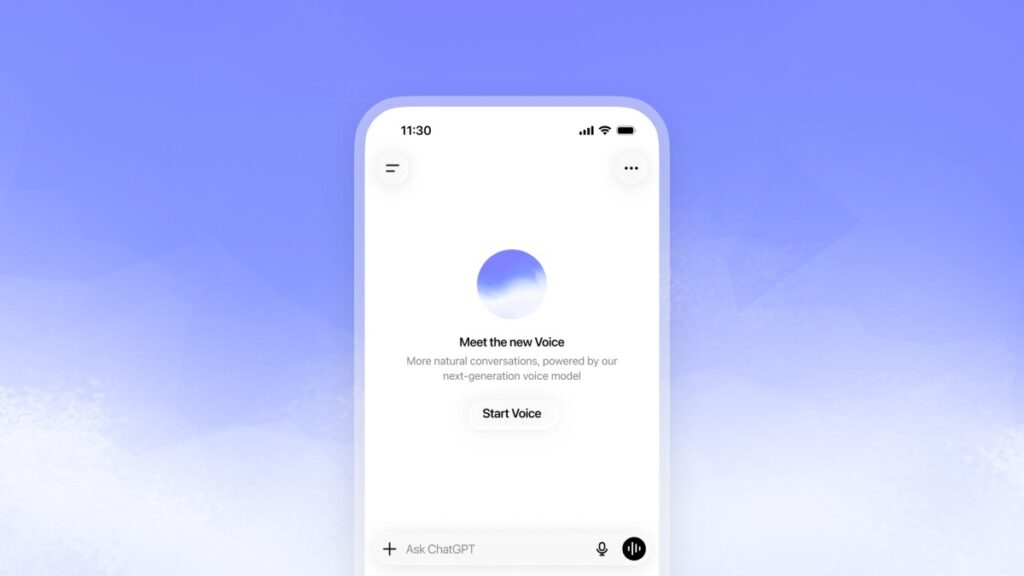
OpenAI has unveiled a new voice model designed to make real-time conversations more natural. The key feature of this model is that its voice mode can listen to the user while the system is speaking. Existing voice AI services often respond only after the user has finished speaking, leading to issues such as interruptions in the conversation flow or delayed responses. Through this new voice model, OpenAI aims to implement interactions closer to human conversation and handle situations frequently occurring in real-life conversations, such as interruptions or brief acknowledgments, more naturally.
Simultaneous listening and speech capabilities are considered particularly important technologies in real-time translation. In interpretation situations, the interpreter must understand the preceding content and convey it in another language while the speaker continues to speak, without missing the subsequent context. OpenAI's new voice mode is designed to support this flow. Since the system can respond by reflecting user corrections or additional explanations mid-sentence, it has potential for use in various conversational services such as travel, meetings, customer support, and education. This demonstrates that voice AI is expanding beyond text-input-centric chatbots to a form closer to actual face-to-face conversation.
This announcement is also significant in that the competition in generative AI is rapidly shifting toward voice interfaces. Natural intonation, low latency, conversation pause handling, and real-time translation performance are expected to become key competitive factors for voice AI services in the future. Through its new voice models, OpenAI is enhancing the experience of users interacting instantly with AI without having to look at a screen or type on a keyboard. This could impact the entire spectrum of fields requiring voice-based interfaces, including smartphones, wearable devices, in-vehicle infotainment, and business collaboration tools.
From freelancer to head of design at a unicorn startup, I've been creating impact through brand and product design for over 18 years. Currently, as CEO and editor-in-chief of Design Compass, I research design that drives business impact.