Tinder is looking to move a step further away from being a swipe-centric app. At its first product event, 'Tinder Sparks,' on March 12, the company unveiled a comprehensive array of features, including AI recommendation capabilities, experiments with offline events, video speed dating, and enhanced safety functions. The core objective is to recreate a flow that leads to real-life meetings while reducing online fatigue.
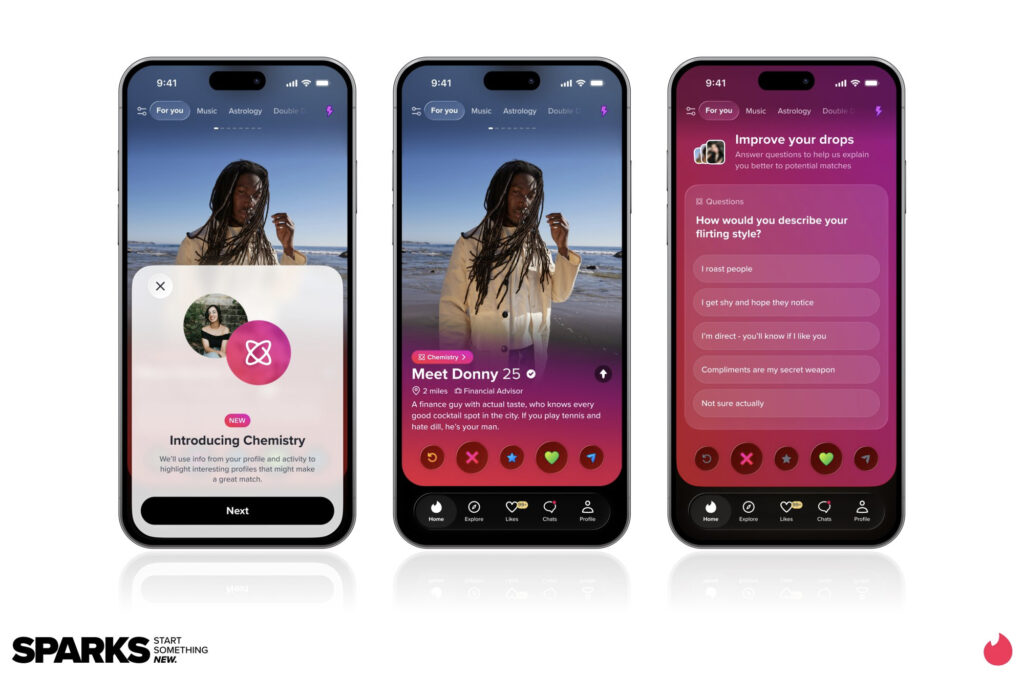
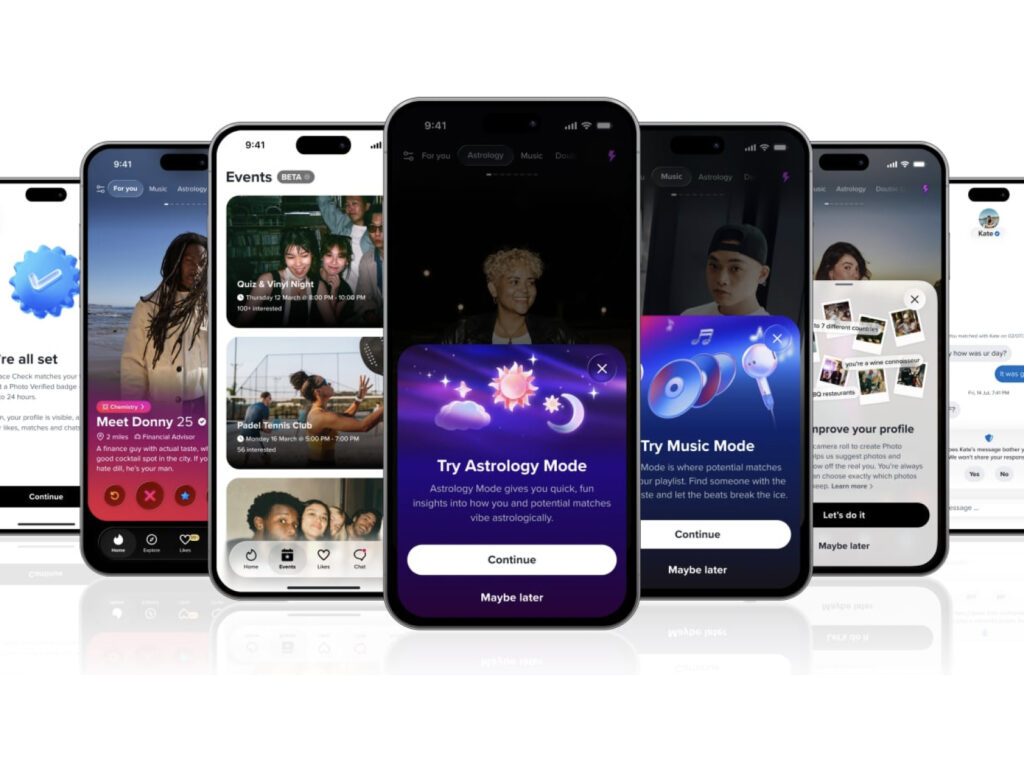
The most notable change is AI. 'Chemistry' is a feature that identifies tastes and interests through question-and-answer analysis and camera roll analysis based on user consent, recommending curated matches every day. Following testing in Australia and New Zealand, this feature was expanded to the U.S. and Canada on March 12. 'Learning Mode,' also unveiled, is a system that rapidly learns user responses to provide more suitable recommendations. Tinder explained that internal testing showed a higher likelihood of new female users returning within their first week.
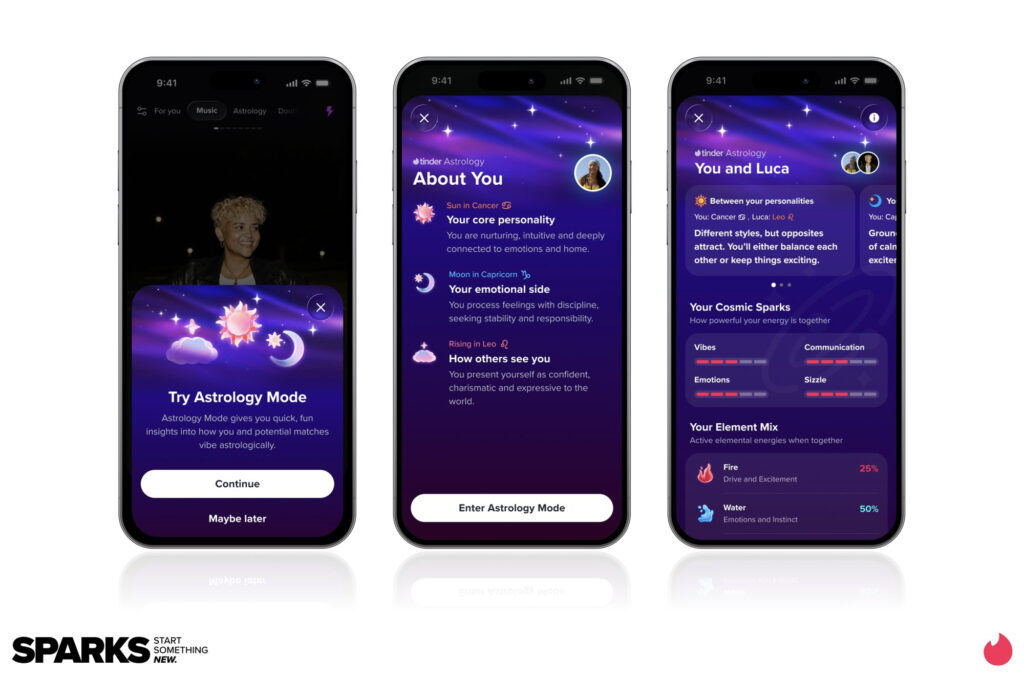
New modes have also been added. Music mode has been redesigned to prioritize profiles with similar Spotify tastes, while Astrology mode displays Sun, Moon, and Rising signs, as well as compatibility information, based on birth year data. Both features have been rolled out globally.
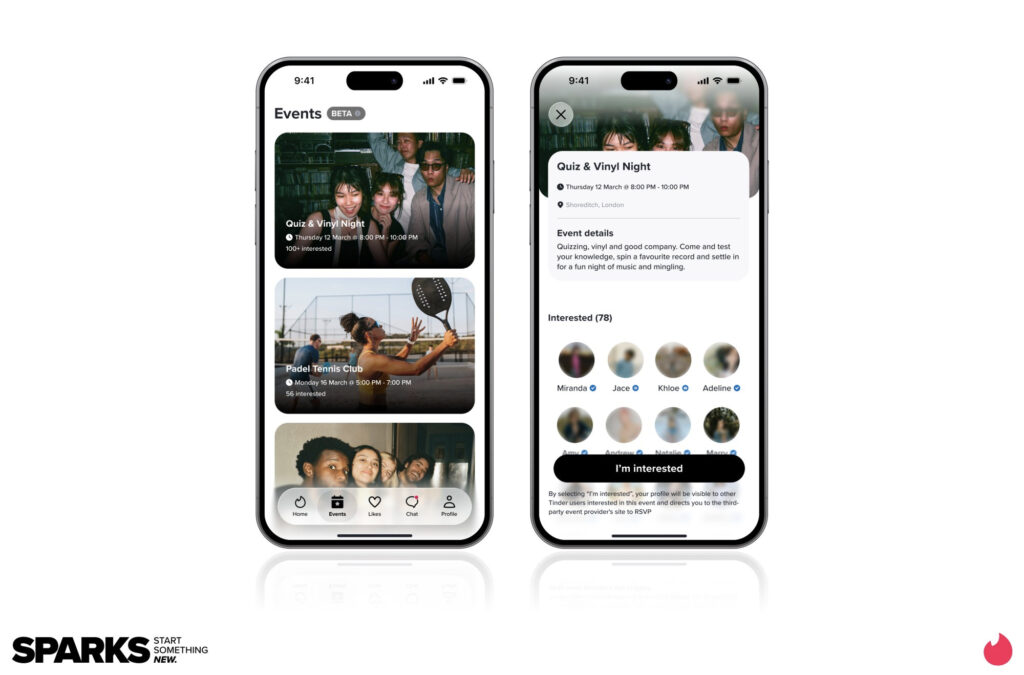
Offline expansion is also accelerating. Tinder is testing an 'Events' feature in Los Angeles that displays local events. Users can express interest in events such as pottery classes or quiz nights, meet people in person, and then reconnect within the app. Three-minute video speed dating is also being tested in the same area.
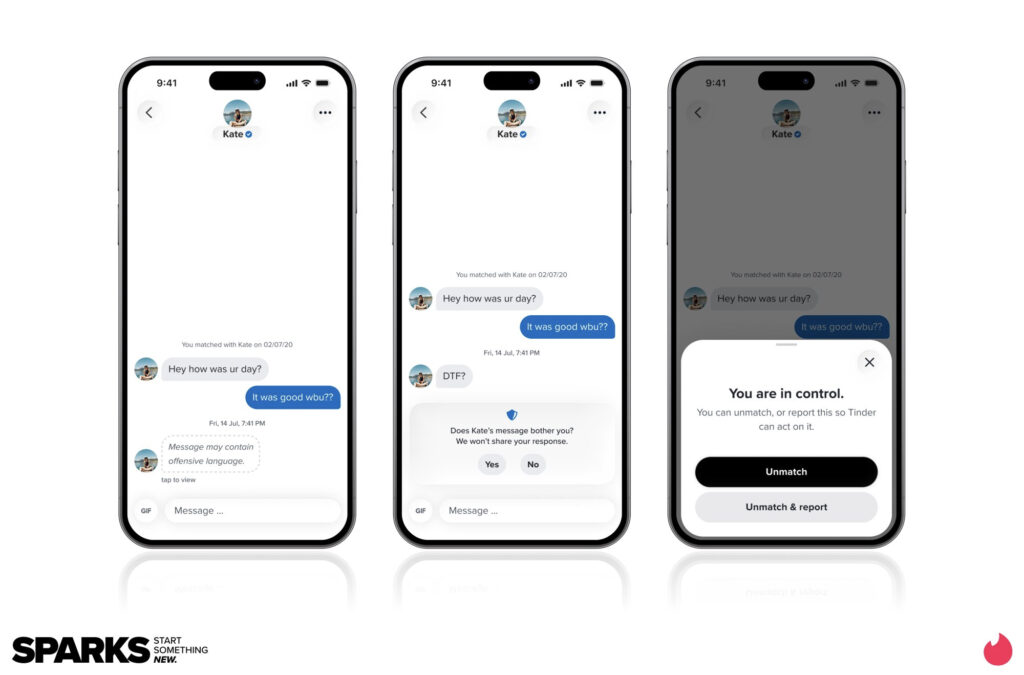
Safety features are also being enhanced with AI. The existing 'Are you sure you want to send this?' feature will refine its detection of harmful expressions, and the 'Is this inconvenient?' feature will automatically blur rude messages.