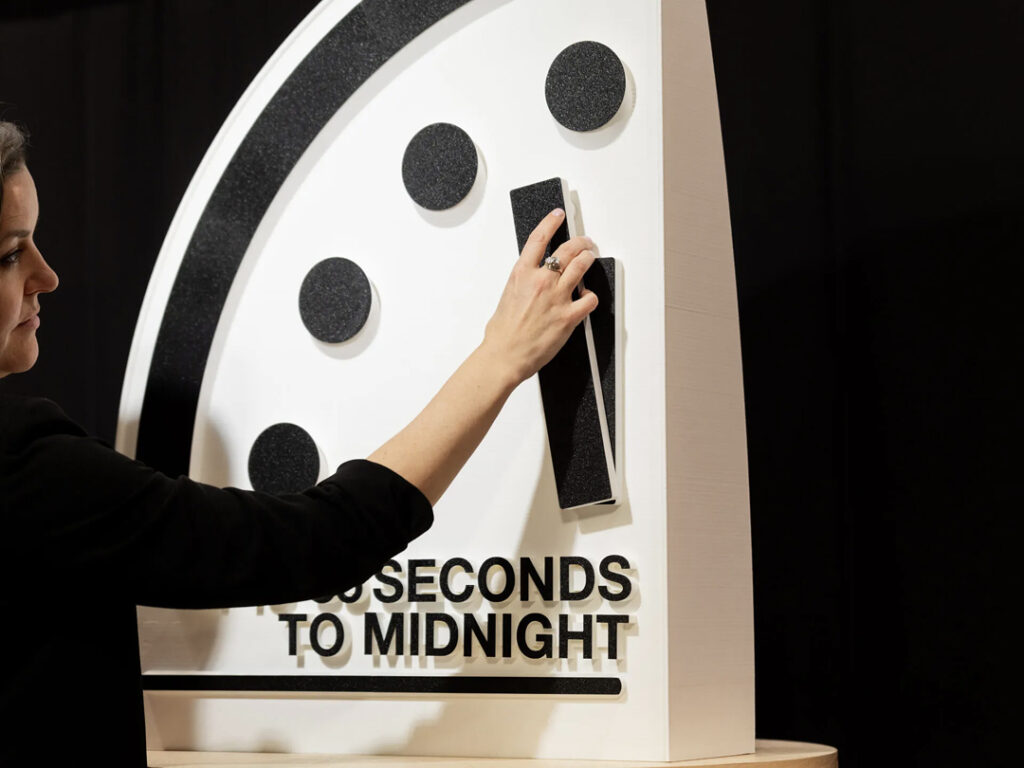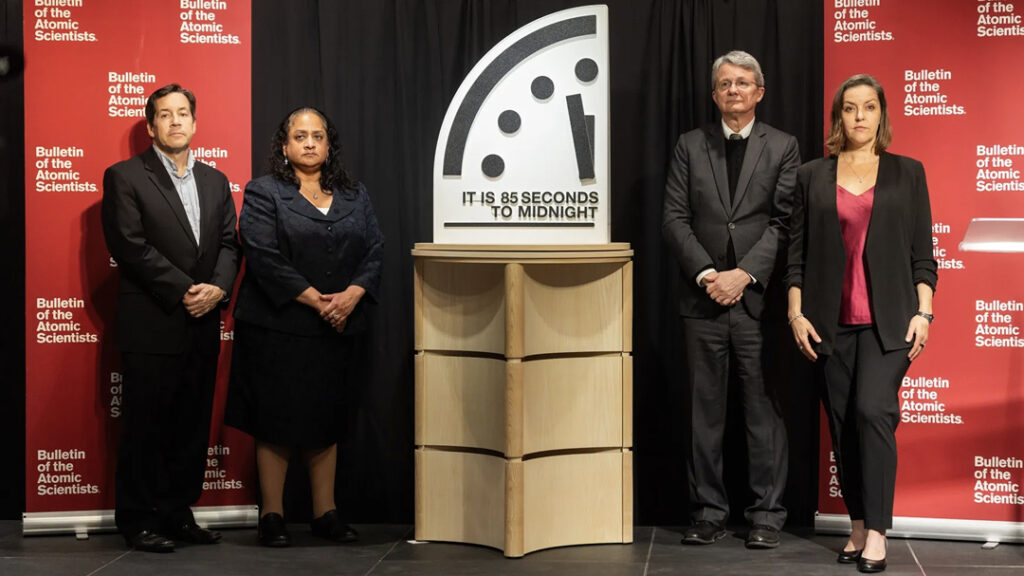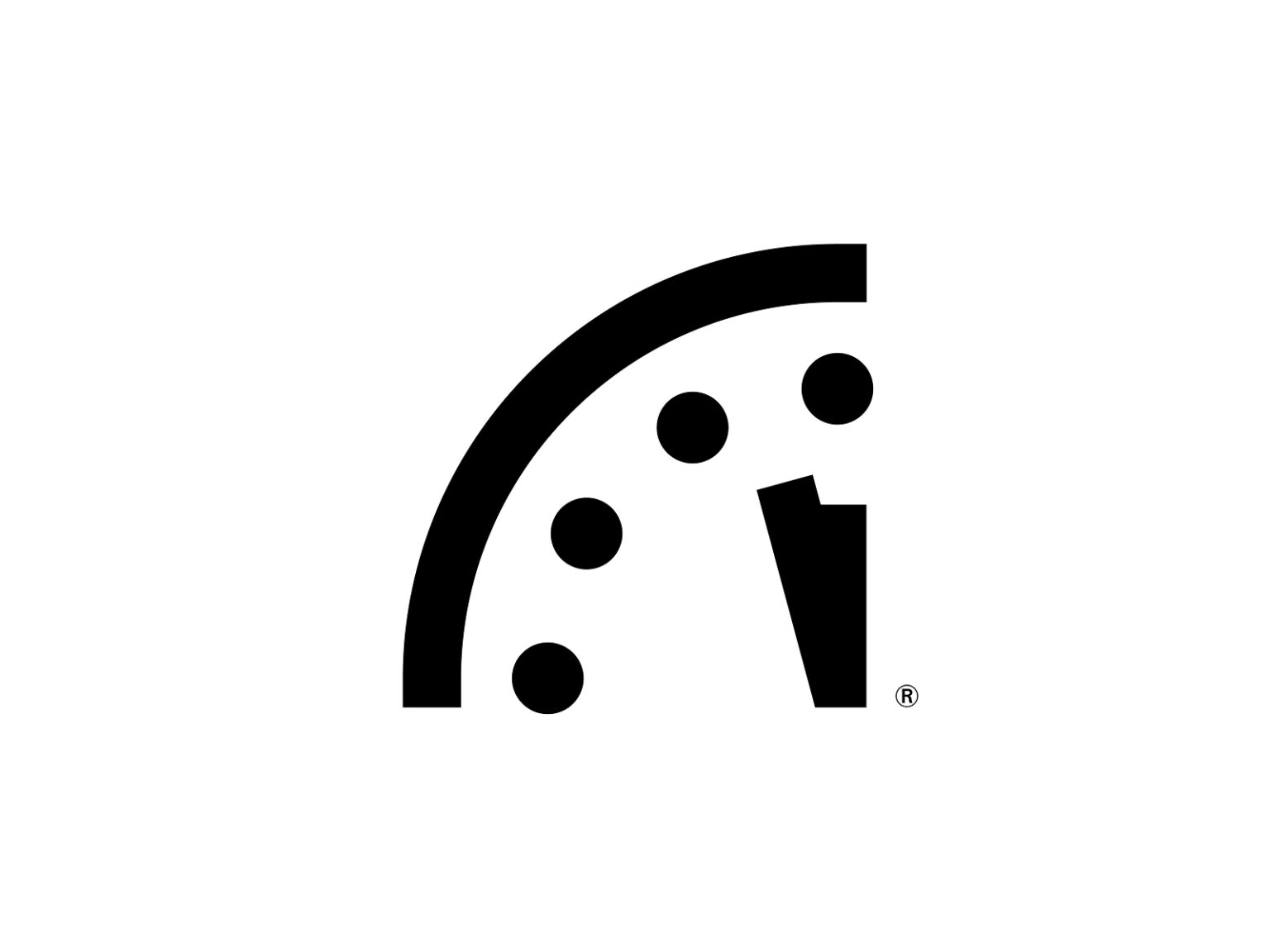
The Bulletin of the Atomic Scientists has set the Doomsday Clock to 85 seconds to midnight on January 27, 2026. This is the closest it has been to midnight since the clock was created in 1947. The last adjustment was in January 2025, when the clock was set at 89 seconds to midnight.
The Bulletin of the Atomic Scientists' Science and Security Committee determined that global existential threats have worsened. The committee called for strengthened cooperation on nuclear weapons control, climate change response, the development of guidelines for the use of artificial intelligence, and biosecurity.
Alexandra Bell, president of the Bulletin of the Atomic Scientists, said catastrophic risks are increasing, international cooperation is weakening, and time is running out. She stressed that change is possible, but that leaders around the world must act swiftly.
Daniel Holtz, chairman of the Science and Security Committee, warned of the dangerous convergence of nuclear threats, climate change, artificial intelligence, and biosecurity. He added that this is compounded by the spread of nationalistic authoritarianism. He stressed the need for international trust and cooperation, but he added that the more the world divides into "us versus them," the more vulnerable humanity becomes.
Maria Ressa, the 2021 Nobel Peace Prize laureate, argued that without facts, there is no truth, without truth, there is no trust, and without trust, necessary cooperation is impossible. She added that an information environment where lies spread faster than facts undermines the very foundations of crisis response.
The committee proposed resuming nuclear arms reduction talks between the United States and Russia as a solution. It urged all nuclear-armed states to avoid a destabilizing investment race in missile defense and to uphold existing moratoriums on explosive nuclear testing. It also recommended a combination of international agreements and domestic regulations to prevent AI from being misused to create biological threats.
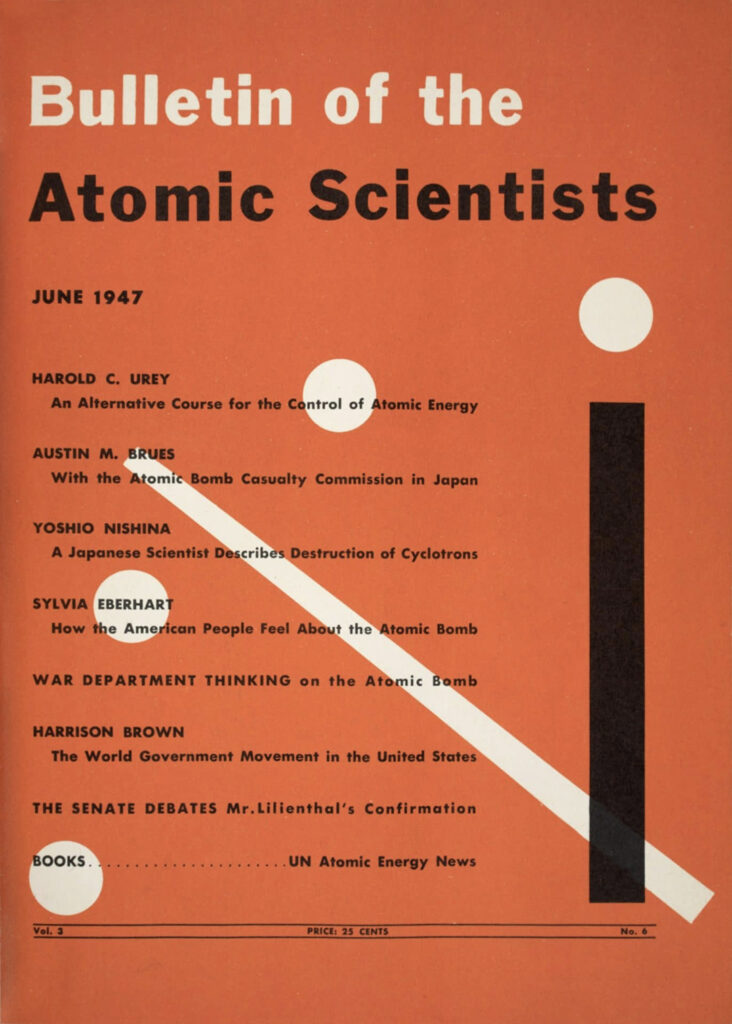
The Doomsday Clock is also powerfully symbolic in the way it conveys its message. Artist Mathil Langsdorff, who designed the cover of the Bulletin of the Atomic Scientists in 1947 when it transitioned to a magazine format, first created the clock image. It's said he started with a intuitive sense that it was the most appropriate form to place on the page. The simple composition of hands and midnight, stripped of numbers, became a graphic device that intuitively conveyed the distance of crisis without requiring extensive explanation. This cover image later became known as the Doomsday Clock and became one of the most widely cited icons of danger in popular culture.