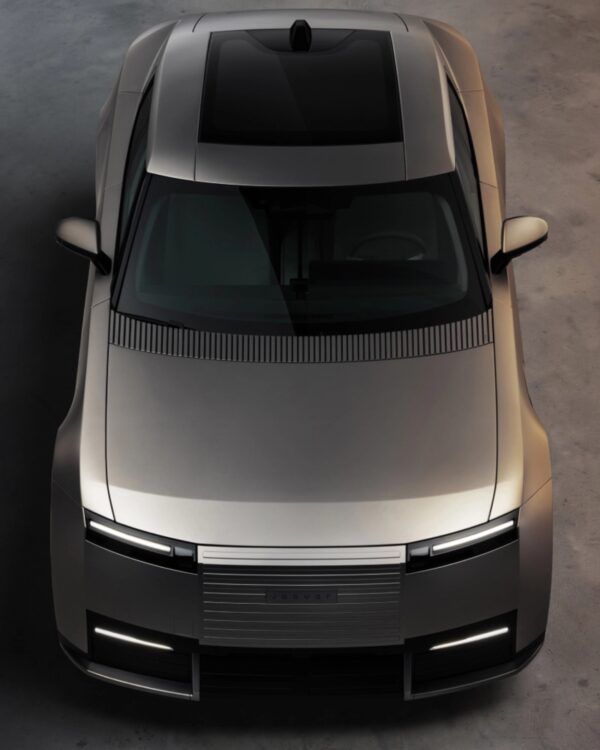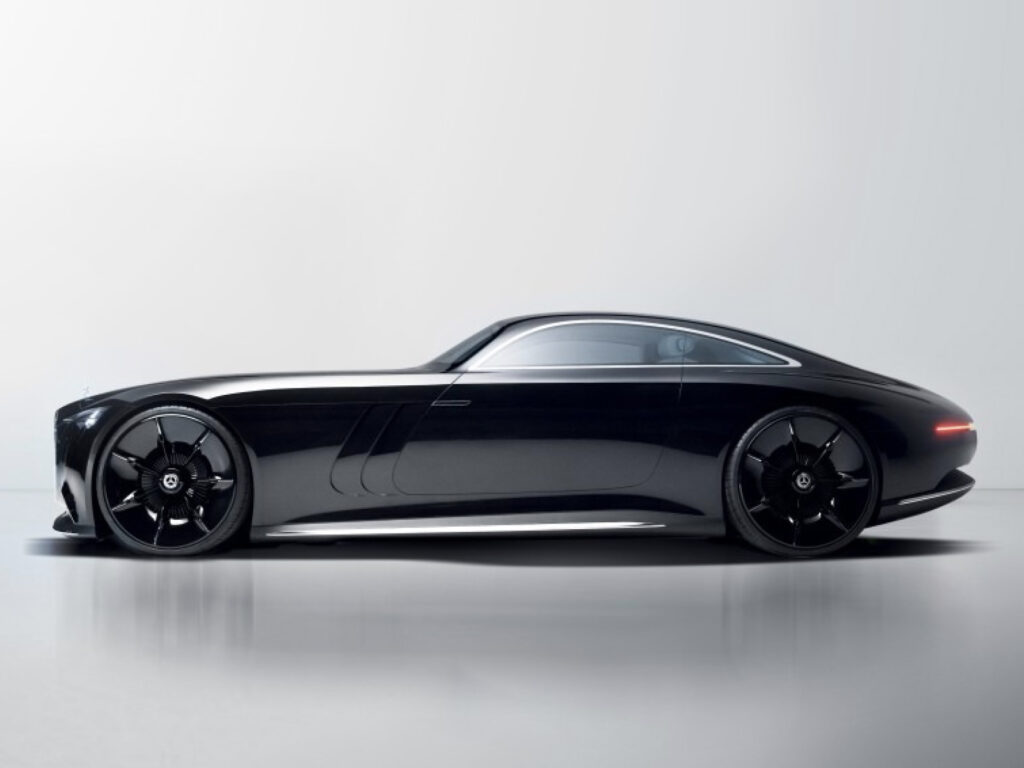
Mercedes-Benz has unveiled the "Vision Iconic" concept car. This model is a declaration of a new design language that combines the elegance of a classic 1930s coupe with future technology. The long bonnet and gentle roofline harmoniously combine, while the illuminated front grille, along with the brand's iconic three-pointed star emblem, creates a powerful presence. By reinterpreting details from legendary models like the 600 Pullman and the 300SL in a modern way, it epitomizes "retro futurism," where tradition and innovation coexist.
The vehicle body is coated with "Solar Paint," a thin-film solar coating technology, enabling it to generate approximately 12,000 km of driving energy annually. It is environmentally friendly, using no rare earth elements or silicon, and generates electricity even when the vehicle is stationary. Furthermore, it combines steer-by-wire technology with a Level 4 autonomous driving system, enabling fully automated driving and parking without driver intervention.
The interior is designed with a "hyper-analog" lounge concept, breaking away from the digital-centric nature of Hyundai car interiors. Deep blue velvet seats, mother-of-pearl, and brass details combine to create a contemporary interpretation of 1930s Art Deco. The central "Zeppelin" glass dashboard evokes the movement of an analog clock, and when the doors open, elaborate animations begin to play. The floor, adorned with "straw marquetry," a 17th-century decorative technique, harmonizes craftsmanship and art.
Mercedes-Benz has introduced neuromorphic computing, which mimics the human neural network, into its autonomous driving system. This technology has dramatically improved traffic recognition speed while saving up to 901 TP3T of energy compared to conventional AI.