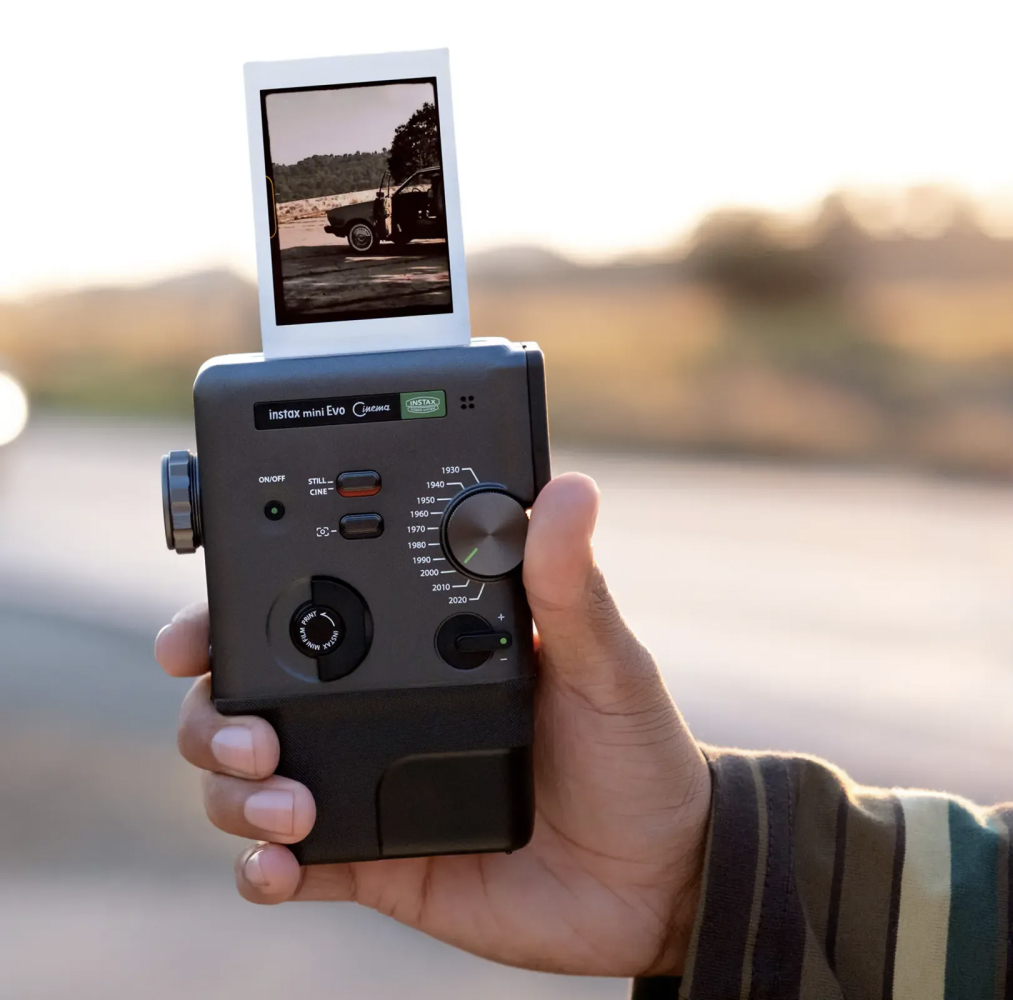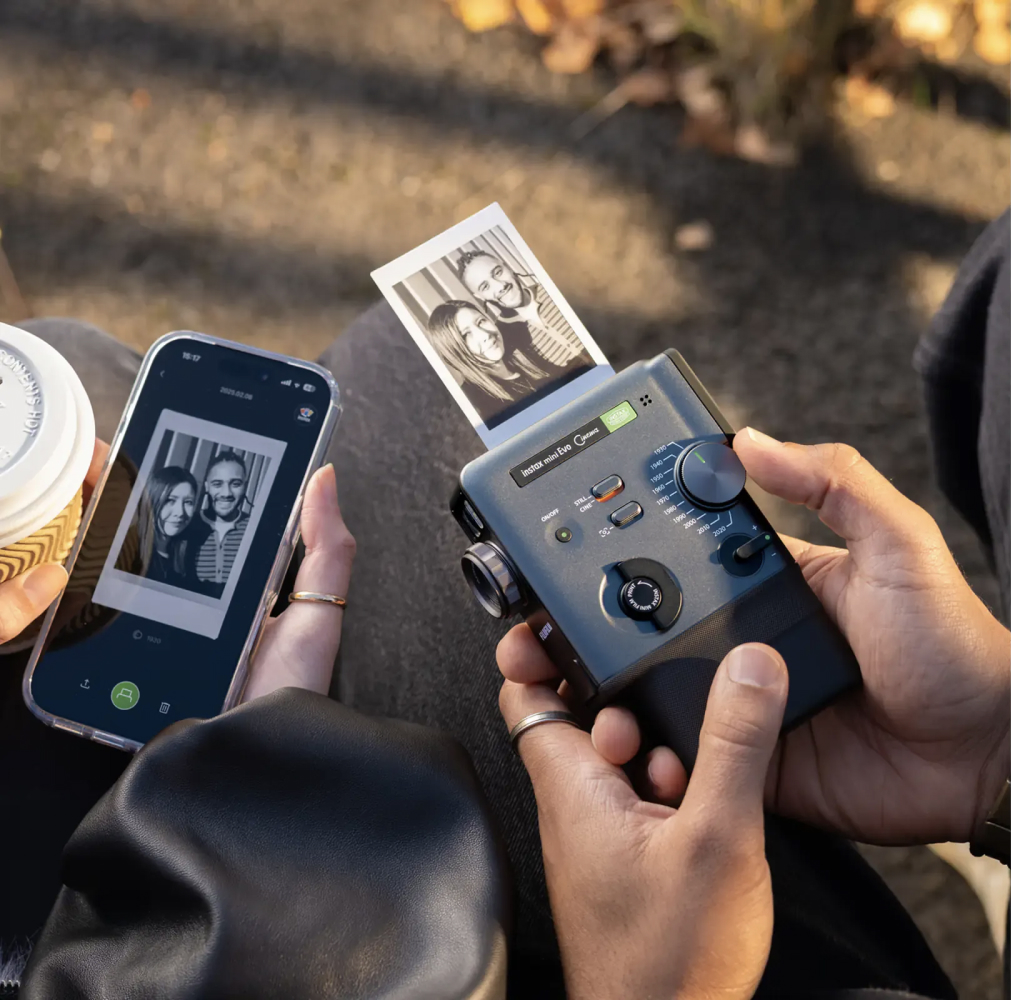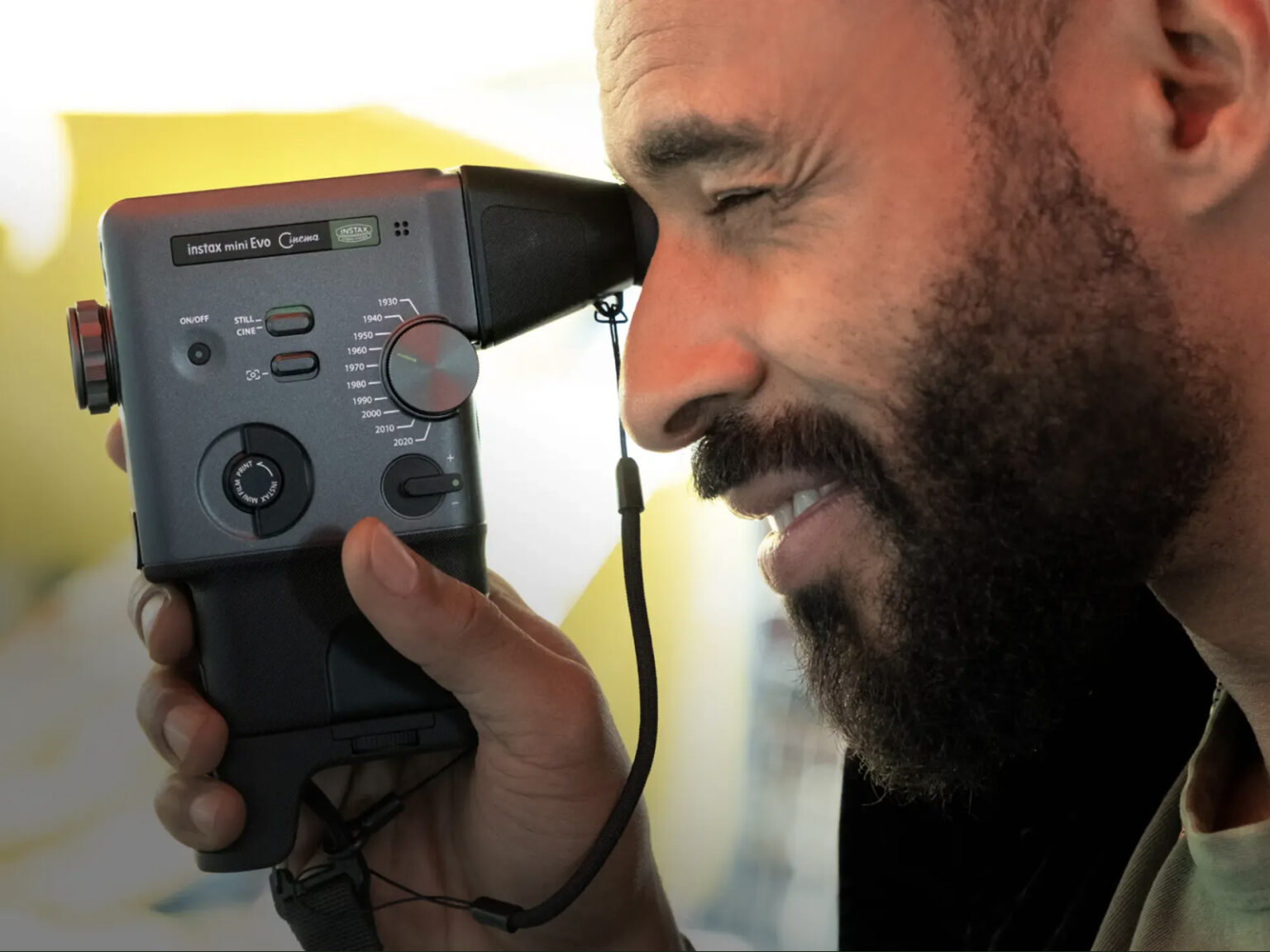
Fujifilm announced the new Instax Mini Evo Cinema, a new product in its hybrid instant camera Evo series, on the 7th.

The core of this product is its ability to print both photos and videos. The camera converts the video data into a QR code, then prints it along with a cut-out scene from the video as an Instax print. Scanning the QR code on the print with your smartphone allows you to play and download the linked video.
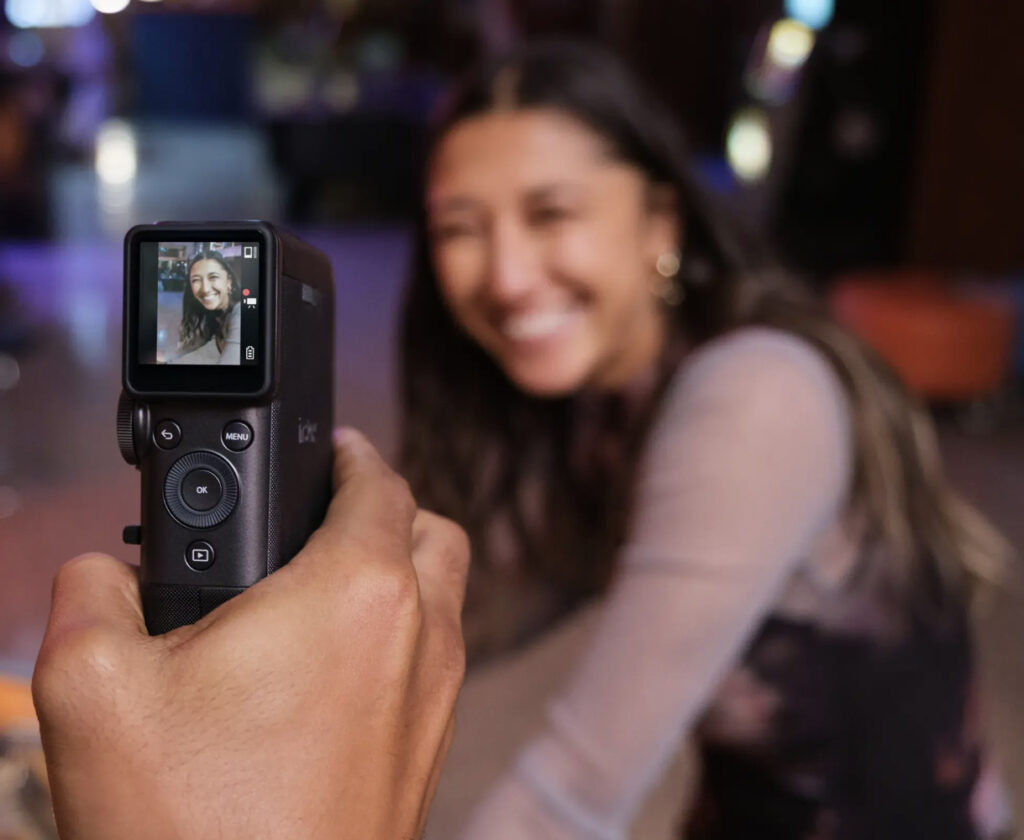
Video recording is structured to record for up to 15 seconds while holding down the shutter button. Fujifilm states that video must be uploaded via a dedicated app, and that uploaded videos can be downloaded for two years.
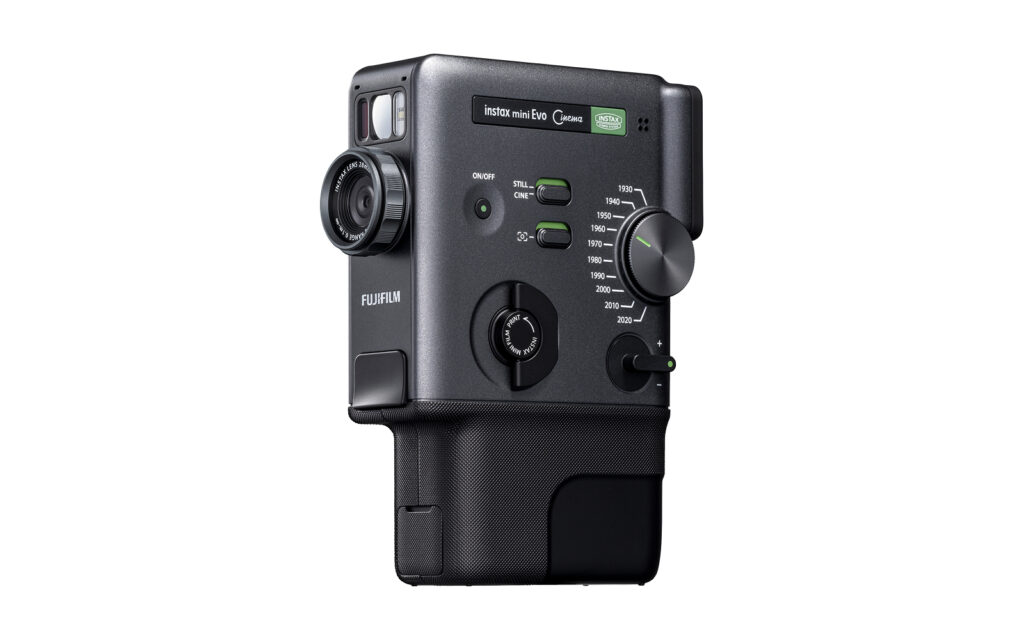
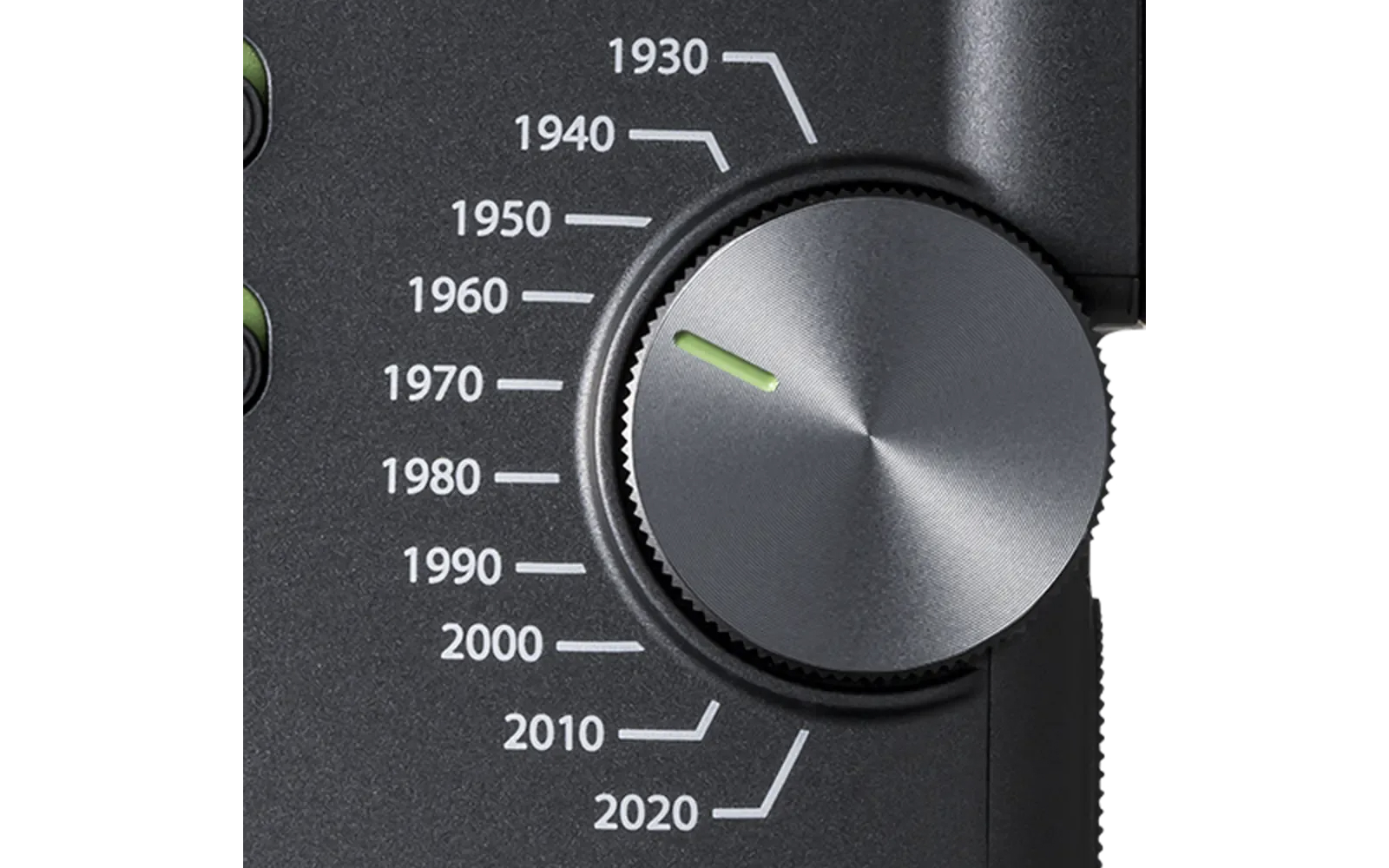
Another distinguishing feature is the side-mounted Eras Dial. It offers ten effects, each representing a specific era, including 1960, which captures the sensibility of an 8mm film camera. Each effect can be adjusted in ten levels of intensity, allowing for a total of 100 expressions, the company explained. The company added that the effects reflect not only screen texture but also details like noise and tape shake, and are also applied to audio. 
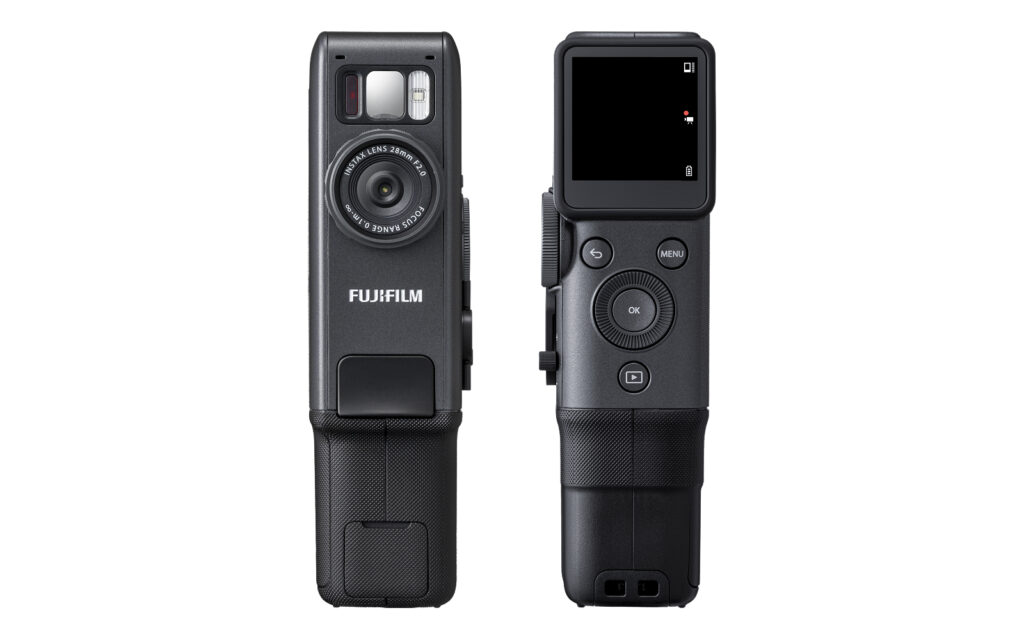
The exterior features a vertical grip design inspired by the Fujica Single 8, released in 1965. The analog operating experience is emphasized, with features like the click of a dial and a print lever reminiscent of film winding. A viewfinder attachment accessory and grip attachment are also included.
Functionally, it also doubles as a smartphone printer. Clips can be combined and edited into videos up to 30 seconds long using a dedicated app, and cinematic opening and ending templates are also provided. Fujifilm also announced that it supports direct smartphone image printing.
Foreign media outlets are interpreting this product as a combination of short videos and instant printing. According to some published information, it features a 28mm equivalent F2.0 lens and supports Wi-Fi and Bluetooth connectivity, though detailed specifications are limited.
Fujifilm explained that since its launch in 1998, Instax has expanded its lineup beyond analog instant cameras to include hybrid cameras and smartphone printers. This product is interpreted as an attempt to bring back the physical properties of paper prints in an environment where image sharing has become commonplace.